






- Navigation -
 Current Location:
NEWS DETAILS
NEWS INFORMATION
Cast Iron Welding Jig Table Buying Guide: Key Factors to Consider
AUTHOR:Bozhong Tool DATE:2026-04-26 15:14:59 HITS:93
A cast iron welding jig table is a long‑term asset for any fabrication shop or industrial production line. Known for outstanding stability, vibration absorption, and high precision, cast iron tables are the go‑to choice for accuracy‑demanding welding applications. But not all cast iron tables are created equal. Making the right choice means looking beyond the surface.
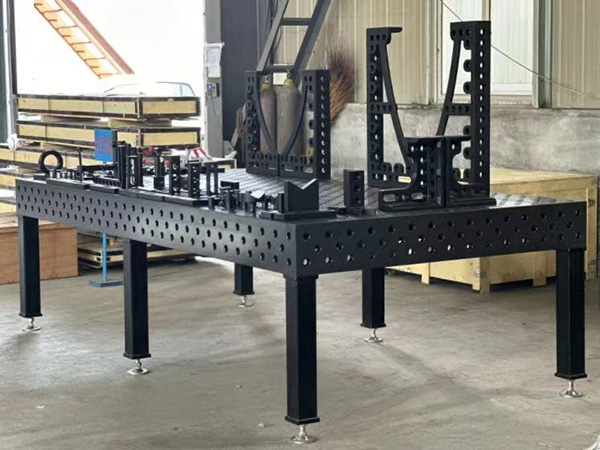
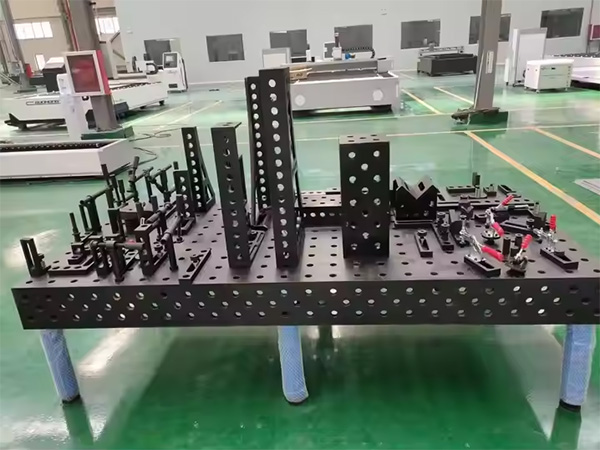
This guide walks you through the seven most important factors to consider before investing in a cast iron welding jig table.
1. Casting Quality & Material Grade
The foundation of a good cast iron welding table is the quality of its raw material and casting process. High‑grade cast iron delivers the rigidity and dimensional consistency you need.
What to check:
·Type of cast iron – Gray cast iron is the industry standard.
·Internal structure – Should be dense, free of pores or cracks.
·Stress relief – Proper heat treatment after casting removes internal stresses.
A well‑stress‑relieved table will resist long‑term warping under heavy use. Poor casting quality, on the other hand, often leads to surface cracks and gradual loss of accuracy.
2. Flatness & Machining Precision
Flatness is one of the most critical indicators of a quality welding jig table. Even tiny surface deviations can throw off welding accuracy and final assembly quality.
Key points to evaluate:
CNC machining accuracy
Flatness tolerance – Look for ±0.1mm or better on precision models
Surface grinding quality
Why flatness matters:
Ensures accurate workpiece alignment
Provides stable welding conditions
Lowers rework and correction costs
For high‑precision fabrication shops, this factor is non‑negotiable.
3. Hole Grid System Design
Most modern cast iron welding jig tables feature a standardized hole grid, which allows flexible fixture positioning across the table surface.
Important specifications include:
Hole diameter – Commonly 16mm or 28mm
Grid spacing – Standard layouts of 50mm or 100mm
Hole position accuracy – CNC‑drilled for consistency
A precise hole grid gives you:
Fast fixture setup
High repeatability for production runs
Compatibility with standard clamps and accessories
This feature is essential for modular, scalable welding operations.
4. Load Capacity & Structural Strength
Cast iron is naturally strong, but the table's structural design still plays a major role in how much weight it can handle.
Evaluate these aspects:
·Maximum load rating – Both static and dynamic loads
·Table thickness – Thicker tops resist bending
·Reinforcement ribs – Added structure under the tabletop
·Base frame stability – A sturdy base prevents wobbling
A well‑designed cast iron table can support heavy components without deformation, making it suitable for:
·Large steel structures
·Heavy machinery parts
Continuous industrial welding operations
5. Vibration Damping Performance
One of cast iron's biggest advantages is its natural ability to absorb vibration.
Why this matters:
·Reduces welding distortion
·Improves weld seam consistency
·Enhances precision during both machining and assembly
Compared to steel tables, cast iron significantly minimizes vibration transfer. For high‑precision applications, this is a critical advantage.
6. Modularity & Expandability
Modern fabrication shops need flexibility. Many cast iron welding jig tables now support modular systems.
What to look for:
·Expandable table sections – Add more surface area as needed
·Compatible fixture systems – Clamps, stops, angle brackets
·Adjustable accessories – For different workpiece sizes
A modular design helps you:
·Adapt to various project sizes
·Reduce setup time between jobs
·Improve overall workshop efficiency
7. Heat Resistance & Long‑Term Durability
Welding environments generate high temperatures, so durability is essential.
Cast iron naturally offers:
·High thermal stability – Resists deformation under heat
·Long service life – Even under heavy‑duty conditions
However, don't overlook surface protection. Anti‑rust coatings or oil treatments are important for long‑term maintenance and corrosion resistance.
Final Thoughts
Choosing the right cast iron welding jig table isn't just about the price tag — it's about precision, durability, and long‑term productivity. By carefully evaluating material quality, machining precision, hole grid design, load capacity, vibration damping, modularity, and heat resistance, you can make a smart investment that supports your production needs for years to come.
A high‑quality cast iron welding jig table will significantly improve welding accuracy, reduce production errors, and boost overall shop floor efficiency.
Looking for a Reliable Supplier?
We are a professional manufacturer of cast iron welding jig tables, offering:
·OEM and custom solutions
·Strict quality inspection systems
·Global export experience
Contact us with your requirements — table size, load capacity, and application — and we will recommend the best solution for your project within 24 hours.
References
GB/T 7714:cast-iron-welding-jig-table-buying-guide-key-factors-to-consider
MLA:Becht, J. E. (1995). Cast Iron: Physical and Engineering Properties. Elsevier Science.
APA: A review and analysis of current computer-aided fixture design approaches. Robotics and Computer-Integrated Manufacturing
-
Welding Table Surface Hardness — What Rockwell and Brinell Numbers Mean for Buyers
-
Welding Table Load Capacity — Understanding Static and Dynamic Ratings
-
Modular Welding Table ROI — Calculating Return on Investment for Fabrication Shops
-
Industrial Metrology Basics for Welding Fabrication — Standards, Tools, and Workflows
-
Granite Surface Plate Calibration — Frequency, Methods, and Standards
-
How to Design a Welding Fixture from Scratch — A Step-by-Step Engineering Guide
Botou Bozhong Precision Machine Tool Co., Ltd.
Copyright © 2025-2026 https://www.bozhong-weldingtable.com. All Rights Reserved Botou Bozhong Precision Machine Tool Co., Ltd.Copyright