






- Navigation -
 Current Location:
NEWS DETAILS
NEWS INFORMATION
Key Considerations for Granite Platforms in Optical Measurement
AUTHOR:Bozhong Tool DATE:2025-12-03 16:41:29 HITS:71
A Granite Platform has long been considered the benchmark foundation for optical measurement systems due to its exceptional stability, uniform density, and ability to remain dimensionally reliable over extended use. In environments where measurement precision defines product quality—ranging from laboratory research setups to industrial metrology rooms—the choice of platform material significantly influences accuracy. For teams operating at a manufacturer or high-volume production level, choosing the right granite support surface becomes even more vital.
This deep rewritten guide explains the core performance features of granite platforms, how they affect optical results, and what users should evaluate before integrating one into their measurement workflow.
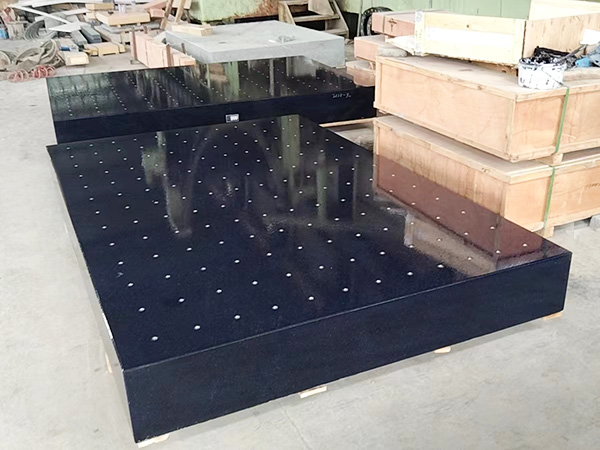
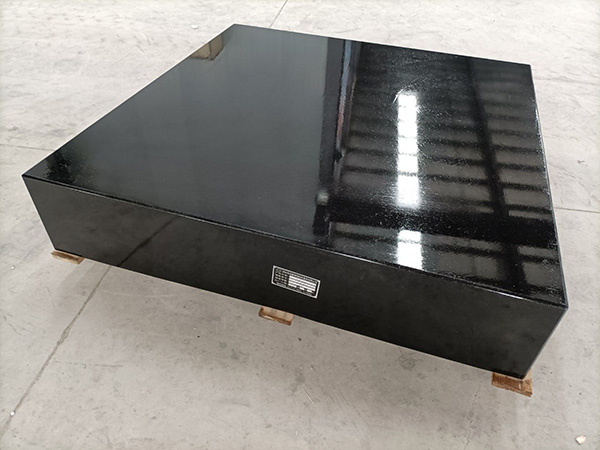
Why Granite Serves as the Optimal Base for Optical Systems
1. Minimal Thermal Sensitivity for High Accuracy
Measurement tasks relying on optical components—such as laser interferometers, vision systems, or structured-light sensors—can be easily affected by slight thermal variations. Granite’s naturally low coefficient of thermal expansion ensures that the platform remains dimensionally stable, preventing shifts in alignment and helping optical instruments maintain tight tolerances during extended measurement sessions.
2. Natural Resistance to Vibrations
Granite’s crystalline interior structure absorbs energy efficiently, reducing micro-vibrations that could distort optical readings. When instruments rely on precise beam projection or high-resolution imaging, even minor environmental vibrations can introduce signal noise. A Granite Platform dampens these disturbances, helping maintain measurement integrity.
3. Long-Term Flatness Retention
Unlike metal surfaces, granite does not undergo warping or internal stress changes. Over time, its structure remains consistent, ensuring the platform retains its calibrated flatness level. This characteristic makes granite ideal for repetitive optical measurements where consistency is critical.
Performance Factors That Influence Measurement Quality
Flatness Tolerance and Measurement Grade
The precision of optical equipment depends heavily on having a base surface that is extremely flat. Granite Platforms are produced in different accuracy grades, from standard lab-grade to ultraprecision flatness. Optical measurement—especially in micron or sub-micron ranges—benefits greatly from higher grades, which prevent alignment drift during scanning, imaging, or laser-based evaluation.
Material Strength and Density Variation
Granite quality varies depending on mineral composition and structural density. High-grade granite features uniform crystalline distribution, providing better rigidity and stability under load. When optical devices are heavy or mounted with multiple accessories, material uniformity becomes essential to avoid microscopic deflection.
Platform Geometry and Internal Reinforcement
The thickness and internal support structure of a Granite Platform significantly influence how well it performs under working loads. Thicker platforms with engineered rib patterns maintain stability even when supporting advanced optical hardware such as high-speed cameras or multi-axis measurement units.
Environmental Conditions Affecting Optical Measurement Accuracy
Temperature Regulation
Even though granite itself remains stable, optical instruments remain highly sensitive to ambient temperature changes. Establishing a controlled measurement environment ensures that the platform and equipment operate within ideal conditions.
Vibration Isolation Setup
Optical measurements involving reflection, beam triangulation, or patterned illumination require a still operating environment. Granite Platforms paired with damping legs or isolation mounts further reduce external vibration transfer, improving the sharpness and consistency of measurement signals.
Cleanliness and Surface Care
Dust particles or contaminants on the platform’s surface can affect how components align or sit. Regular maintenance using proper cleaning tools preserves the surface’s accuracy and prevents unwanted deviations.
Benefits of Using Granite Platforms in Optical Workflows
1. Superior Alignment for Optical Paths
Many optical systems rely on the perfect alignment between lenses, sensors, and light sources. A Granite Platform provides the geometric stability required to maintain these relationships across repeated tasks.
2. Reduced Measurement Uncertainty
Granite’s vibration-damping nature minimizes noise in high-precision measurements. This becomes especially important for delicate tasks such as micro-feature inspection, 2D edge detection, or interferometric displacement analysis.
3. Enhanced Repeatability for Production Environments
For teams managing bulk supply or manufacturer-grade production cycles, repeatability is crucial. A Granite Platform ensures that each measurement occurs under consistent mechanical conditions, reducing statistical variation in inspection data.
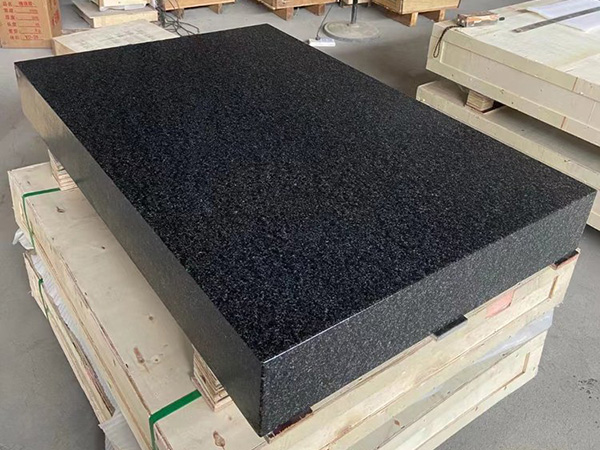
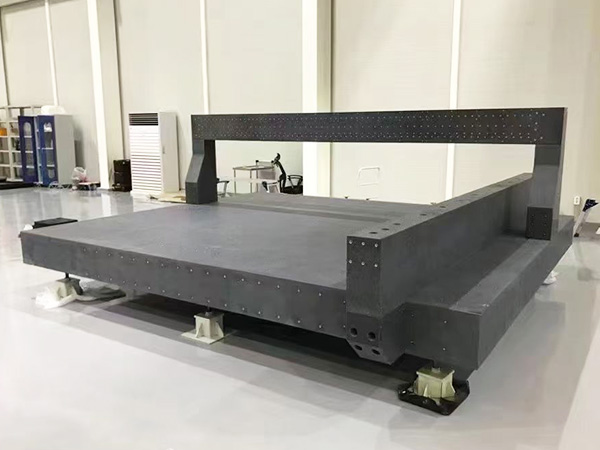
How to Select the Right Granite Platform for Optical Measurement
1. Determine Required Accuracy Class
Evaluate whether your optical tasks require laboratory grade, precision grade, or metrology grade. Higher-end optical systems benefit from tighter flatness tolerances.
2. Match Platform Dimensions to Your Equipment Layout
Ensure the platform size accommodates your optical tools comfortably, leaving enough space for motion control systems, alignment brackets, or sample fixtures.
3. Verify Load Capacity and Deflection Resistance
Optical hardware can be surprisingly heavy. Check that the chosen Granite Platform remains stable under expected loads without bending or micro-level distortion.
4. Check Surface Treatment and Scraping Pattern
Proper surface finishing minimizes friction during instrument positioning and helps maintain stable placement for high-accuracy optical scanning.
Conclusion: Granite Platforms Remain Fundamental to Reliable Optical Measurement
The Granite Platform continues to hold its position as one of the most important foundations for optical metrology. Its exceptional thermal stability, vibration absorption, and resistance to long-term deformation make it a crucial asset for laboratories, workshops, and precision-focused manufacturing teams. For environments emphasizing measurement reliability—whether in research or high-volume production—granite offers a durable and dependable solution.
By incorporating a high-quality Granite Platform, optical measurement professionals can ensure that every reading begins with a stable and trustworthy foundation.
References
GB/T 7714:Coordinate measuring machines and systems[M]. Boca Raton, FL, USA:: CRC press, 2012.
MLA:Hocken, Robert J., and Paulo H. Pereira, eds. Coordinate measuring machines and systems. Vol. 6. Boca Raton, FL, USA:: CRC press, 2012.
APA:Hocken, R. J., & Pereira, P. H. (Eds.). (2012). Coordinate measuring machines and systems (Vol. 6). Boca Raton, FL, USA:: CRC press.
-
Welding Table Surface Hardness — What Rockwell and Brinell Numbers Mean for Buyers
-
Welding Table Load Capacity — Understanding Static and Dynamic Ratings
-
Modular Welding Table ROI — Calculating Return on Investment for Fabrication Shops
-
Industrial Metrology Basics for Welding Fabrication — Standards, Tools, and Workflows
-
Granite Surface Plate Calibration — Frequency, Methods, and Standards
-
How to Design a Welding Fixture from Scratch — A Step-by-Step Engineering Guide
Botou Bozhong Precision Machine Tool Co., Ltd.
Copyright © 2025-2026 https://www.bozhong-weldingtable.com. All Rights Reserved Botou Bozhong Precision Machine Tool Co., Ltd.Copyright