






- Navigation -
 Current Location:
NEWS DETAILS
NEWS INFORMATION
Using Cast Iron Surface Plates for Precision Grinding Applications
AUTHOR:Bozhong Tool DATE:2025-12-02 12:28:05 HITS:80
A Cast Iron Surface Plate plays a foundational role in the world of precision grinding. Whether you're refining a single component or maintaining accuracy across repeated part cycles, a stable reference surface determines the quality of every finished piece. These plates, often associated with traditional craftsmanship and modern industrial engineering, continue to prove their value in controlled workshop environments. Their ability to withstand loads, preserve flatness, and support advanced grinding tools makes them a long-standing choice for technicians and manufacturer-level production setups.
This deeply rewritten guide explains why cast iron remains the preferred base material for grinding processes, the performance benefits it offers, and the criteria that matter when selecting a plate for high-accuracy applications.
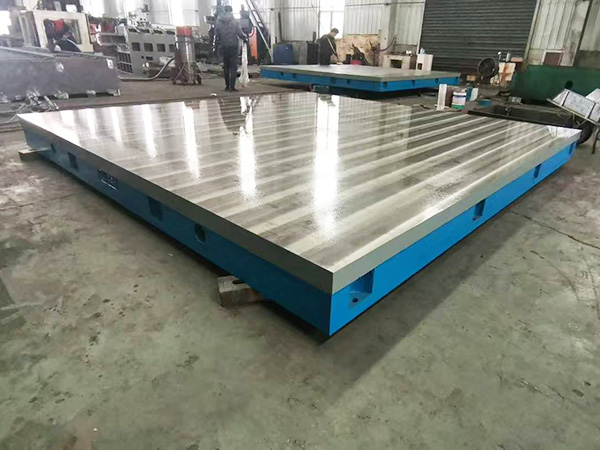
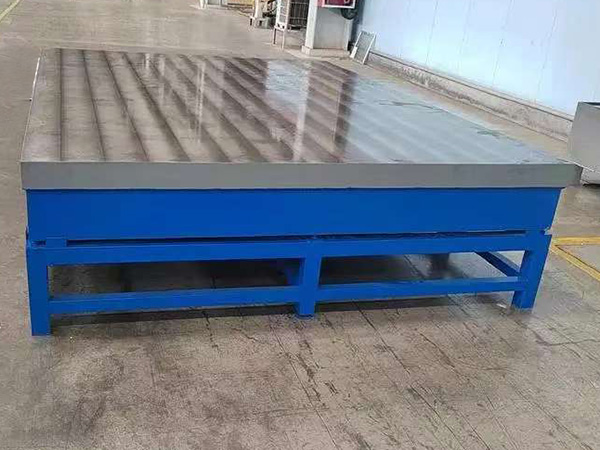
Why Cast Iron Is the Preferred Material for Grinding Platforms
Exceptional Structural Stability
Cast iron’s inherent density provides a stable, immovable base that resists bending or twisting. In grinding applications—where micro-movements can compromise surface finish—this degree of stability is essential. Even under continuous load or extended operations, cast iron maintains a consistent geometric form, keeping the workpiece secure and correctly aligned.
This long-term dimensional stability ensures that machinists can rely on the Cast Iron Surface Plate as a trustworthy foundation, even in environments where temperature fluctuations and mechanical stresses are common.
Natural Vibration Absorption
Precision grinding introduces high-frequency vibration at the tool–workpiece interface. If these vibrations transfer into the supporting platform, the outcome can include chatter marks, uneven grinding depth, or unwanted patterns on the final surface.
A cast iron plate counteracts this problem by naturally absorbing and dissipating vibration. Its graphite microstructure acts like a built-in damping system. This not only improves finishing quality but also creates a more comfortable working environment for technicians handling fine abrasive tasks.
The Importance of Flatness in Precision Grinding
A Reference Plane You Can Trust
Every grinding operation begins with proper positioning. A surface plate acts as the reference that determines whether the part sits at the correct angle, whether clamping forces are uniform, and whether the grinding tool meets the material at the right height. When the plate maintains a high-grade flatness specification, errors are minimized from the start.
Preventing Accumulated Errors
Even tiny deviations in part positioning can accumulate across grinding passes. Over long operations, this may result in taper, uneven material removal, or mismatched geometry. A Cast Iron Surface Plate prevents these issues by offering a reliable positioning baseline that doesn't distort under pressure.
For workshops handling precision components—such as spindle parts, gauge blocks, or tool faces—this consistency becomes an essential element of quality control.
Advantages of Using Cast Iron Surface Plates in Grinding Workflows
1. Consistent and Repeatable Results
High-precision grinding often requires multiple steps performed in sequence. If the working surface shifts even minimally between stages, quality declines. Cast iron maintains the same stable plane across dozens or even hundreds of cycles, making it ideal for operations where consistency is crucial.
2. Longer Tool Life and Reduced Wear
When the workpiece is properly supported, grinding wheels encounter less resistance variation. This reduces heat buildup and prevents localized pressure spikes that can dull or damage the abrasive surface. Over time, this results in longer tool life and smoother grinding performance—valuable benefits for technicians aiming to control costs across production and bulk supply operations.
3. Enhanced Safety and Operator Comfort
Stability isn't simply a performance advantage—it’s a safety factor. A shifting or vibrating work surface increases the risk of tool slips or unexpected movement. The weight and rigidity of a cast iron plate keep the work area secure, reducing operator fatigue and making prolonged grinding tasks easier to handle.
Choosing the Right Cast Iron Surface Plate for Grinding
Accuracy Grade
Surface plates are available in various grades depending on required precision. Higher-grade plates offer finer flatness tolerances suitable for delicate grinding operations or inspection tasks.
Construction and Rib Design
A well-engineered rib pattern underneath the plate prevents twisting and sagging. This is particularly important for larger plates, which must support heavier parts without flexing.
Load Capacity
Evaluate the weight of typical workpieces to ensure the plate remains within its design limits. Excessive load can cause long-term deformation, undermining grinding precision.
Surface Texture and Scraping Pattern
Hand-scraped surfaces not only improve flatness but also retain tiny pockets of oil, making part movement smoother and easier during grinding setup.
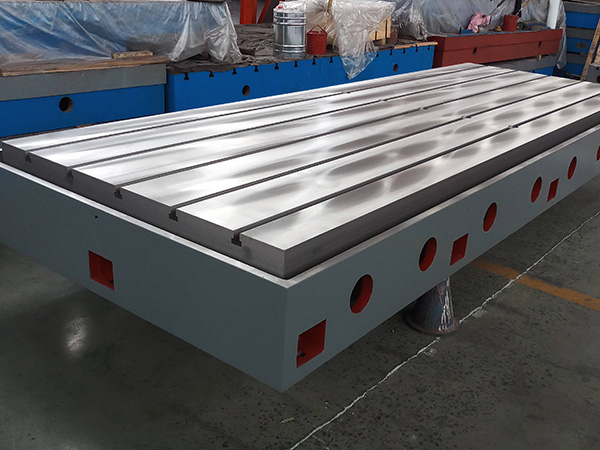
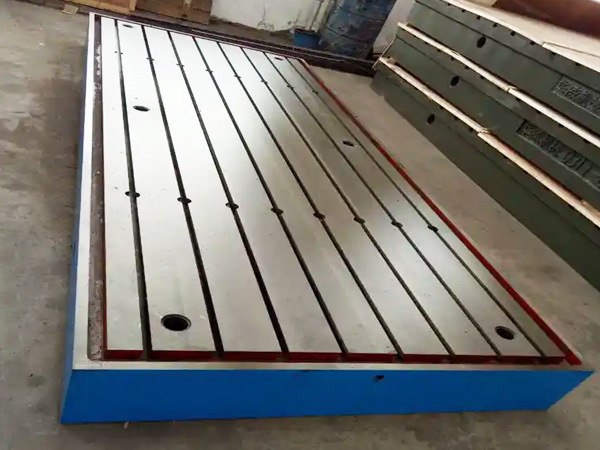
How Cast Iron Surface Plates Improve Grinding Efficiency
Introducing a Cast Iron Surface Plate into a grinding operation immediately elevates process control. With its stable foundation, every pass of the grinding wheel becomes more predictable, alignment becomes easier, and technicians spend less time compensating for uneven support surfaces.
Key improvements include:
·Higher dimensional accuracy
·Reduced rework and scrap rate
·Shorter setup times
·Better performance from grinding tools
·Improved quality assurance in repeated cycles
Whether used for shaping hardened steel tools or fine-tuning precision components, the cast iron plate provides the level foundation required for dependable results.
Conclusion: The Cast Iron Surface Plate as a Precision Grinding Essential
From its unmatched stability to its vibration-absorbing qualities, the Cast Iron Surface Plate remains a core tool for grinding professionals who prioritize accuracy and reliability. Its enduring role in workshops and manufacturing environments is no accident—it consistently provides the precision foundation needed for demanding grinding tasks. For technicians, workshops, and manufacturers seeking a dependable platform for fine material removal work, a cast iron plate remains one of the most effective investments you can add to your grinding setup.
References
GB/T 7714:Doebelin E O, Manik D N. Measurement systems: application and design[J]. 2007.
MLA:Doebelin, Ernest O., and Dhanesh N. Manik. "Measurement systems: application and design." (2007).
APA:Doebelin, E. O., & Manik, D. N. (2007). Measurement systems: application and design.
-
Welding Table Surface Hardness — What Rockwell and Brinell Numbers Mean for Buyers
-
Welding Table Load Capacity — Understanding Static and Dynamic Ratings
-
Modular Welding Table ROI — Calculating Return on Investment for Fabrication Shops
-
Industrial Metrology Basics for Welding Fabrication — Standards, Tools, and Workflows
-
Granite Surface Plate Calibration — Frequency, Methods, and Standards
-
How to Design a Welding Fixture from Scratch — A Step-by-Step Engineering Guide
Botou Bozhong Precision Machine Tool Co., Ltd.
Copyright © 2025-2026 https://www.bozhong-weldingtable.com. All Rights Reserved Botou Bozhong Precision Machine Tool Co., Ltd.Copyright