






- Navigation -
 Current Location:
NEWS DETAILS
NEWS INFORMATION
Machine Tool Casting Machining: Key to Precision and Stress Control
AUTHOR:Bozhong Tool DATE:2026-02-03 14:50:10 HITS:183
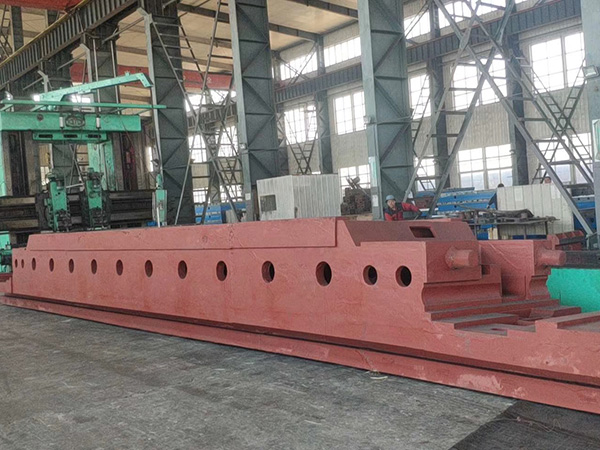
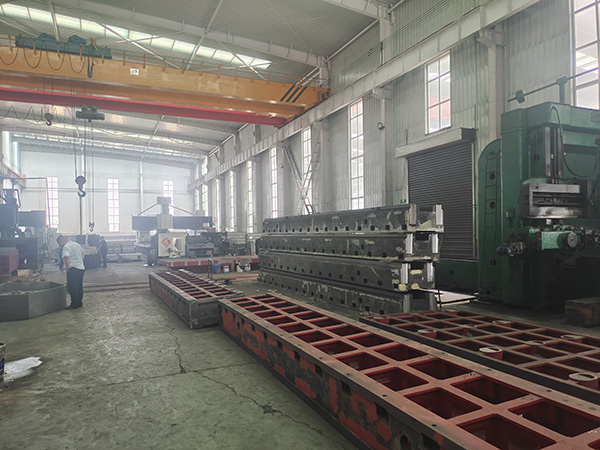
In the field of precision machining, machine tool casting machining is not just a post-casting processing step—it is the key to unlocking the full potential of machine tool castings, directly determining the final precision, stress distribution, and service life of machine tool structural components. From lathe beds and columns to saddles and bearing blocks, every high-performance machine tool relies on sophisticated casting machining to achieve micron-level accuracy and stable stress control. For manufacturers, buyers, and technical personnel, understanding how to optimize machine tool casting machining processes, control residual stress, and ensure machining precision is crucial to reducing costs, improving efficiency, and enhancing product competitiveness. This article will delve into the core value of machine tool casting machining, key techniques, process optimization methods, and selection considerations, providing practical guidance for your work.
Why Machine Tool Casting Machining Is Critical for Precision & Stress Control
Machine tool castings—even those made of high-quality gray cast iron, ductile iron, or alloy steel—require professional machining after casting to meet the strict requirements of machine tool operation. Raw castings have inherent defects such as uneven surface roughness, dimensional deviations, and residual stress, which can only be eliminated or minimized through precise machining. Here’s why machine tool casting machining is irreplaceable:
1. Eliminates Casting Defects, Ensuring Dimensional Precision
Casting processes (such as sand casting and lost foam casting) inevitably produce minor defects: surface burrs, uneven wall thickness, or dimensional deviations beyond the allowable range. Machine tool casting machining—including CNC milling, grinding, boring, and turning—trims excess material, corrects dimensional errors, and ensures that each component meets the design tolerances (often ±0.01mm or higher). This precision is the foundation for the smooth operation of machine tools and the accuracy of machined parts.
2. Relieves Residual Stress, Enhancing Structural Stability
Residual stress generated during casting can cause component deformation or cracking during long-term use. Machine tool casting machining uses controlled cutting parameters and heat treatment coordination to release internal stress: for example, rough machining removes most excess material first to reduce stress concentration, then finish machining ensures precision, and post-machining annealing further relieves residual stress. This process ensures that the machined casting maintains stability under high-speed, high-load operation.
3. Optimizes Surface Quality, Reducing Vibration & Wear
The surface quality of machine tool castings directly affects the friction, vibration, and wear of machine tool components (such as guides and spindles). Precision machining (e.g., precision grinding) improves surface finish (Ra ≤ 0.8μm), reduces friction coefficient, and minimizes vibration during machine tool operation. This not only enhances machining precision but also extends the service life of both the casting component and the entire machine tool.
Key Techniques for High-Quality Machine Tool Casting Machining
Achieving excellent precision and stress control in machine tool casting machining requires mastering core techniques, including process design, cutting parameter optimization, and equipment selection. Below are the key techniques to focus on:
1. Rational Process Planning: Rough Machining → Semi-Finish Machining → Finish Machining
Scientific process planning is the premise of high-quality machining. The standard process for machine tool casting machining follows three stages:
·Rough Machining: Removes 70%-80% of the excess material from the casting, focusing on efficiency. Uses large cutting depth and feed rate, but leaves a certain machining allowance to avoid stress concentration caused by excessive cutting force.
·Semi-Finish Machining: Corrects the dimensional errors caused by rough machining, trims the surface, and prepares for finish machining. Reduces cutting force and feed rate to reduce residual stress.
·Finish Machining: Focuses on precision and surface quality. Uses small cutting depth, high cutting speed, and precision tools (e.g., diamond tools, cubic boron nitride tools) to achieve the required dimensional tolerance and surface finish.
2. Cutting Parameter Optimization: Balancing Efficiency & Quality
Cutting parameters (cutting speed, feed rate, cutting depth) directly affect machining precision, stress distribution, and tool life. For different casting materials, parameters need to be adjusted accordingly:
·Gray cast iron (GG25/GG30): Suitable for medium cutting speed (80-120m/min), moderate feed rate (0.15-0.3mm/r), to avoid excessive vibration.
·Ductile iron (QT450-10/QT600-3): Higher strength requires lower cutting speed (60-100m/min) and smaller cutting depth (0.5-1mm), to prevent tool wear and stress buildup.
·Alloy cast steel: Uses high-speed steel or carbide tools, low feed rate (0.1-0.2mm/r), and cooling lubricants to reduce cutting heat and residual stress.
3. Post-Machining Treatment: Enhancing Stress Control & Stability
Post-machining treatment is critical for relieving residual stress and improving dimensional stability. Common methods include:
·Annealing: Heating the machined casting to 550-650°C, holding for 2-4 hours, then cooling slowly to release residual stress and improve material toughness.
·Natural Aging: Placing the machined casting in a constant temperature environment for 7-15 days to let residual stress release naturally, suitable for small-batch, high-precision components.
·Precision Grinding: For key components (e.g., machine tool beds), precision grinding (with a grinding wheel speed of 30-50m/s) ensures flatness and parallelism, further reducing stress concentration.
Material Adaptation in Machine Tool Casting Machining
Different machine tool casting materials have unique properties, requiring targeted machining techniques to ensure precision and stress control. Here’s how to adapt machining to common materials:
1. Gray Cast Iron (Most Widely Used)
Gray cast iron has excellent vibration damping and low cost, making it ideal for machine tool beds, saddles, and other structural components. Machining tips: Use carbide tools, avoid wet machining (to prevent graphite oxidation), and control cutting temperature to avoid thermal deformation.
2. Ductile Iron
Ductile iron has higher strength and toughness than gray cast iron, suitable for high-load components (e.g., columns, gears). Machining tips: Use sharp tools to reduce cutting force, adopt intermittent cutting to avoid chip accumulation, and perform post-machining annealing to relieve stress.
3. Alloy Cast Steel
Alloy cast steel (e.g., Cr-Mo steel) has excellent wear resistance and high-temperature stability, used for high-precision, high-load machine tool components. Machining tips: Use high-hardness tools (e.g., cubic boron nitride), adopt low-speed, small-feed machining, and use cooling lubricants to reduce cutting heat.
Key Considerations When Choosing Machine Tool Casting Machining Services
Choosing a reliable machining service provider is as important as optimizing the process. Here are the top factors to consider to ensure precision and stress control:
1. Machining Equipment & Technical Capabilities
Prioritize providers with advanced precision machining equipment: CNC machining centers, precision grinders, coordinate measuring machines (CMM), etc. These devices ensure machining accuracy and consistency. Additionally, check the provider’s technical team experience in machine tool casting machining—especially in stress control and high-precision machining.
2. Quality Inspection Standards
Strict quality inspection is the guarantee of machining quality. The provider should have a complete inspection system:
·Dimensional inspection: CMM testing to verify compliance with tolerances.
·Stress testing: Using stress detectors to ensure residual stress meets standards.
·Surface quality inspection: Using surface roughness meters to check surface finish.
3. Customization Capabilities
Different machine tools have unique casting sizes, shapes, and precision requirements. Choose a provider that offers custom machining services—able to adjust processes, tools, and parameters according to your specific needs, ensuring the machined castings perfectly match your machine tool applications.
Real-World Applications: Machine Tool Casting Machining in Industry
Machine tool casting machining is widely used in various precision manufacturing industries, where its role in precision and stress control directly affects product quality:
·Automotive Manufacturing: Machining of machine tool bed castings and spindle castings for CNC lathes, ensuring the precision of engine block and transmission part machining.
·Aerospace: High-precision machining of 5-axis machining center castings, achieving tolerances as low as ±0.005mm for aircraft structural parts and engine components.
·Medical Device Production: Ultra-precision machining of machine tool castings for surgical instrument manufacturing, ensuring the accuracy and safety of medical devices.
References
GB/T 7714:Machining Process Planning for High-Precision Machine Tool Castings. Journal of Manufacturing Processes
MLA:Optimization of Cutting Parameters for Gray Cast Iron Machine Tool Casting Machining. Journal of Mechanical Engineering
APA:Residual Stress Relief Technology in Machine Tool Casting Machining. Transactions of the China Welding Institution
-
Welding Table Surface Hardness — What Rockwell and Brinell Numbers Mean for Buyers
-
Welding Table Load Capacity — Understanding Static and Dynamic Ratings
-
Modular Welding Table ROI — Calculating Return on Investment for Fabrication Shops
-
Industrial Metrology Basics for Welding Fabrication — Standards, Tools, and Workflows
-
Granite Surface Plate Calibration — Frequency, Methods, and Standards
-
How to Design a Welding Fixture from Scratch — A Step-by-Step Engineering Guide
Botou Bozhong Precision Machine Tool Co., Ltd.
Copyright © 2025-2026 https://www.bozhong-weldingtable.com. All Rights Reserved Botou Bozhong Precision Machine Tool Co., Ltd.Copyright