






- Navigation -
 Current Location:
NEWS DETAILS
NEWS INFORMATION
Why Cast Iron Surface Plates Remain the Benchmark in Precision Engineering
AUTHOR:Bozhong Tool DATE:2025-10-19 10:38:26 HITS:132
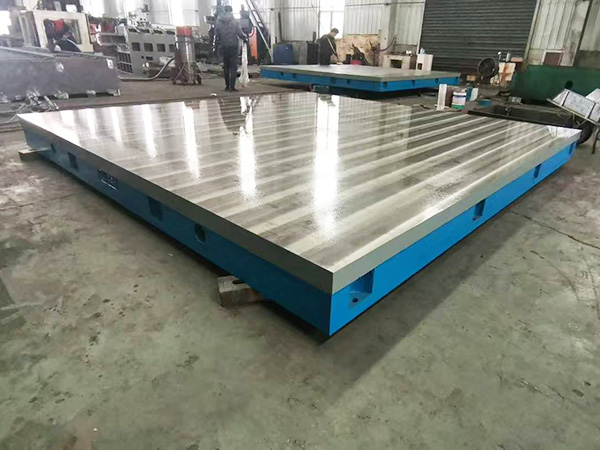
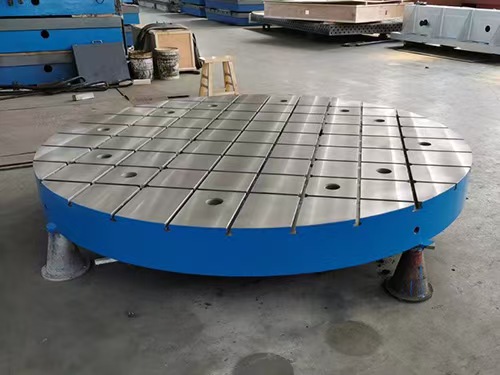
In the world of precision measurement and industrial calibration, the Cast Iron Surface Plate stands as a quiet but vital foundation for accuracy. It provides the reference plane from which tools, parts, and gauges achieve alignment and measurement integrity.
Although steel plates have gained some popularity in certain modern workshops, the enduring dominance of cast iron is no coincidence. Its structural stability, damping capability, and ability to retain precision make it the preferred material for professional metrology setups—especially when sourced from a China manufacturer that can provide bulk supply with certified quality assurance.
1. The Critical Role of the Surface Plate
Every precision workshop depends on a stable, flat surface to ensure accurate inspection and assembly. The Cast Iron Surface Plate serves as that foundation, providing a consistent, repeatable reference plane that is resistant to thermal distortion and mechanical fatigue.
Its microstructure—rich in graphite flakes—absorbs vibration naturally, preventing unwanted resonance during measurement tasks. This property alone often distinguishes cast iron from steel, which transmits vibration and temperature changes more readily, causing minor but critical dimensional shifts.
2. Dimensional Stability: The Cast Iron Advantage
One of the key reasons the Cast Iron Surface Plate outperforms steel lies in its dimensional consistency under thermal fluctuation. Cast iron reacts slowly to heat and cold, maintaining flatness even when environmental temperatures change dramatically.
Steel plates, conversely, tend to expand or contract unevenly, introducing deviations that can compromise the calibration of sensitive instruments.
Most China manufacturers that produce Cast Iron Surface Plates use specialized stress-relief annealing processes to eliminate internal tension. This treatment ensures that each plate remains stable and accurate across years of heavy industrial use.
3. Damping Performance and Vibration Control
Precision measurement requires stillness, and that’s where the Cast Iron Surface Plate excels. Its graphite composition provides superior damping capability, absorbing mechanical vibration from surrounding equipment or human motion.
Steel lacks this damping property—vibration often travels through the metal and disturbs the accuracy of readings. For metrology labs, machine tool setups, and gauge calibration facilities, this distinction is crucial.
This is one of the reasons why bulk-supplied cast iron surface plates from China have become a global standard in advanced manufacturing environments.
4. Surface Durability and Long-Term Precision
Over years of use, the working surface of a measurement plate can degrade. However, cast iron’s microstructure acts as a self-lubricating material, minimizing friction and reducing wear during repeated contact with tools or parts.
Steel surfaces, though harder at first, can develop localized wear spots and scratches, which lead to measurement errors. Once a steel plate loses its perfect plane, restoring it becomes nearly impossible.
Cast iron, on the other hand, can be re-scraped and re-lapped to its original flatness. This serviceability makes it more sustainable and cost-effective over time—another reason professional users prefer the Cast Iron Surface Plate.
5. Maintenance Simplicity and Longevity
Maintaining a Cast Iron Surface Plate requires minimal effort. Regular cleaning and periodic re-lapping can keep it in top shape for decades. Many China-based manufacturers supply these plates in bulk, complete with calibration certificates and ISO-compliant maintenance guidelines.
By contrast, steel plates often require specialized treatments or protective coatings to resist corrosion, increasing both cost and downtime. Once internal stress forms within steel, reconditioning becomes a complex and sometimes futile process.
6. Corrosion Resistance and Environmental Protection
Thanks to its graphite composition, cast iron naturally resists oxidation better than untreated steel. Many manufacturers enhance this property with a thin oil layer or epoxy coating to protect against humidity and chemical exposure.
This advantage makes Cast Iron Surface Plates especially valuable in coastal factories, laboratories, and environments with fluctuating temperature or moisture levels. Steel, by comparison, demands more frequent rust prevention and maintenance, which can interrupt production flow.
7. Economic Efficiency and Scalable Production
From a cost-performance perspective, cast iron remains the most practical material for surface plates. It provides a balance of strength, accuracy, and long service life unmatched by steel.
When sourced from a China manufacturer with bulk supply capability, the cost per unit decreases significantly without compromising quality. These suppliers operate advanced foundries and precision grinding workshops capable of meeting tight flatness tolerances—often conforming to international standards such as DIN 876 and GB/T 22095.
For laboratories, automotive factories, and machine tool producers, this scalability ensures access to precision instruments at competitive prices.
8. Industrial Applications and Global Trust
The Cast Iron Surface Plate is indispensable in modern manufacturing, used for:
·Dimensional inspection and calibration
·Tool and die alignment
·CMM base platforms
·Precision assembly and part layout
·Research and quality control labs
Its proven reliability under thermal, mechanical, and environmental stress has earned it global trust. From aerospace engineering to heavy machinery inspection, cast iron remains the material that engineers depend on for precision.
9. Conclusion: The Enduring Value of Cast Iron
While steel plates may appear appealing for certain cost or weight considerations, they fall short in terms of long-term stability, vibration damping, and maintainability. The Cast Iron Surface Plate, with its time-tested structure and superior physical properties, continues to serve as the gold standard in metrology and manufacturing.
Choosing a trusted China manufacturer with bulk supply ensures consistent material integrity, verified flatness, and extended lifespan—qualities that steel simply cannot match.
Ultimately, a well-crafted Cast Iron Surface Plate is more than a tool; it is a commitment to precision, safety, and enduring performance in every industrial process.
References
GB/T 7714:Kováčiková P, Vavro J, Vavro jr J, et al. Measuring of vibration-damping properties of cast iron[J]. Manufacturing technology, 2018, 18(1): 57-59.
MLA:Kováčiková, Petra, et al. "Measuring of vibration-damping properties of cast iron." Manufacturing technology 18.1 (2018): 57-59.
APA:Kováčiková, P., Vavro, J., Vavro jr, J., & Dubec, A. (2018). Measuring of vibration-damping properties of cast iron. Manufacturing technology, 18(1), 57-59.
-
Welding Table Surface Hardness — What Rockwell and Brinell Numbers Mean for Buyers
-
Welding Table Load Capacity — Understanding Static and Dynamic Ratings
-
Modular Welding Table ROI — Calculating Return on Investment for Fabrication Shops
-
Industrial Metrology Basics for Welding Fabrication — Standards, Tools, and Workflows
-
Granite Surface Plate Calibration — Frequency, Methods, and Standards
-
How to Design a Welding Fixture from Scratch — A Step-by-Step Engineering Guide
Botou Bozhong Precision Machine Tool Co., Ltd.
Copyright © 2025-2026 https://www.bozhong-weldingtable.com. All Rights Reserved Botou Bozhong Precision Machine Tool Co., Ltd.Copyright