






- Navigation -
 Current Location:
NEWS DETAILS
NEWS INFORMATION
What You Need to Know About Repairing Damaged Machine Tool Castings
AUTHOR:Bozhong Tool DATE:2025-12-09 16:52:10 HITS:143
Machine Tool Castings: The Foundation of Precision Machinery
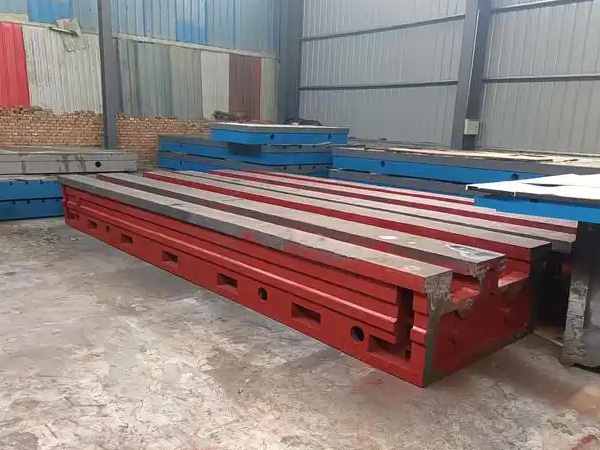
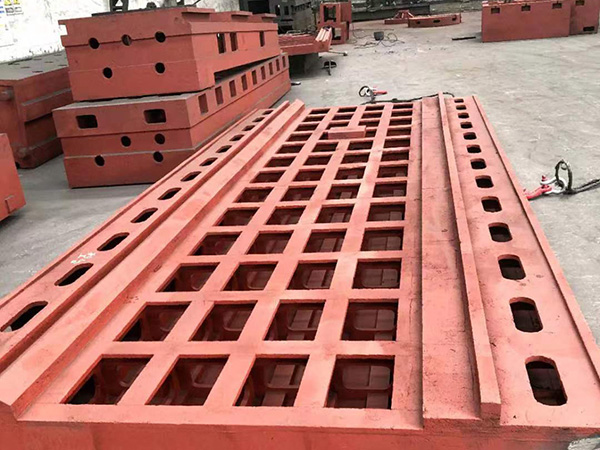
In the world of industrial machining, machine tool castings serve as the primary structural elements that hold equipment in alignment. Their weight, density, and vibration absorption directly influence precision and reliability. When these cast components become cracked, worn, or distorted, machine accuracy declines, production slows, and operators face rising maintenance costs.
Because castings support everything from spindle housings to linear guide platforms, understanding how to repair them properly is critical. And in many workshops, the long-term durability of cast parts is often linked to the consistency of the original manufacturer and the casting’s production quality.
Why Machine Tool Castings Become Damaged
Damage rarely occurs suddenly—most failures develop gradually. Recognizing the underlying cause helps ensure the repair is not just cosmetic but structurally sound.
Mechanical Stress and Fatigue
Repeated load cycling slowly introduces micro-cracks in cast iron or cast steel. Over months or years, these hairline fractures can expand into visible failures.
Thermal Expansion and Contraction
If a machine undergoes major temperature swings—such as from cutting heat or coolant shock—the casting may warp or crack. Uneven thermal distribution is particularly problematic in older equipment.
Improper Alignment or Overloading
If a machine isn’t leveled correctly or experiences excessive tool pressure, stress becomes concentrated in certain sections of the casting. Overloading accelerates wear patterns.
Vibration Transmission
Unbalanced rotors, worn bearings, and loose tool holders generate persistent vibration, which is harmful to the internal grain structure of the casting.
Understanding these triggers allows technicians to choose the most appropriate repair method.
How to Properly Inspect Damaged Castings
Quality repairs always start with precise evaluation.
Dimensional Accuracy Checks
Technicians use dial indicators, granite surfaces, and precision measuring tools to determine whether the casting has bowed, twisted, or shifted from its original geometry.
Non-Destructive Testing (NDT)
To identify hidden structural issues, inspectors rely on:
·Ultrasonic testing for internal voids
·Magnetic particle inspection for crack tracing
·Dye penetrant for surface fracture mapping
These methods reveal the severity of the damage and help decide whether repair or full replacement is needed.
Effective Methods for Repairing Machine Tool Castings
Not every casting requires the same process. The appropriate repair depends on crack size, casting material, and the stresses applied during machine operation.
1. Cold Metal Repair (Stitching and Locking)
This method mechanically reconnects cracked cast iron using stitching pins and metal locks. Because no heat is used, it prevents thermal distortion and preserves original alignment—ideal for precision machinery bases or columns.
2. Controlled Welding or Brazing
When welding is necessary, careful heating and slow cooling are essential to avoid brittleness. Nickel-based rods or brazing filler metals are often chosen to match the casting’s composition.
This technique is best for localized surface breaks rather than long structural cracks.
3. Epoxy Rebuild and Surface Composite Repair
For worn shoulders, chipped corners, or damaged low-stress surfaces, high-strength epoxy compounds work well. They restore geometry without affecting the casting’s overall load capabilities.
4. Machining and Surface Restoration
Once cracks are repaired, precision surfaces such as ways, bores, and guide tracks often require re-machining. This returns the casting to its original tolerance requirements and ensures operational accuracy.
When is Replacement the Better Choice?
Although many machine tool castings can be safely restored, certain situations call for complete replacement:
·Deep or branching structural cracks
·Severe warping that cannot be milled flat
·Porosity or internal defects detected during NDT
·Repeated failures caused by foundational issues
In such cases, ordering new cast components from a source with reliable production quality or consistent bulk supply ensures compatibility and stable long-term machine performance.
Why Manufacturer Quality Matters During Repairs
The success and longevity of a repair depend greatly on the casting’s original quality. Castings produced under high-precision mold control and consistent metallurgy are easier to repair and maintain dimensional stability.
High-quality castings typically offer:
·better vibration absorption
·reduced internal porosity
·uniform grain structure
·predictable machining response
When the original casting is well-produced, repairs bond more effectively, and the equipment retains performance over longer operational cycles.
Preventive Measures to Protect Castings from Future Damage
Once a casting has been repaired, preventive practices are essential to extending machine life.
1. Maintain Proper Machine Leveling
Uneven support causes twisting stress. Annual or biannual leveling prevents long-term deformation.
2. Keep Lubrication Systems in Good Condition
Proper lubrication reduces friction, prevents heat buildup, and minimizes stress on critical surfaces.
3. Avoid Thermal Shock
Introduce warm-up and cool-down periods when operating at high temperatures or using coolant systems.
4. Monitor Vibration Sources
Unbalanced tooling or worn spindle components should be corrected promptly to avoid transmitting vibration into the casting.
5. Schedule Regular Inspection Intervals
Routine visual checks and periodic NDT testing can detect cracks before they grow into major failures.
Conclusion: Protecting the Integrity of Machine Tool Castings
Repairing machine tool castings is a technical process that requires thorough inspection, careful material handling, and the right repair method. The stability of a machine tool depends heavily on how well its cast components are maintained and how precisely they are restored after damage. With dependable manufacturer standards, stable production quality, and access to suitable replacement parts when needed, castings can continue supporting high-precision machining for years.
Strong, well-maintained machine tool castings remain one of the most critical elements in achieving accuracy, consistency, and longevity in industrial machining environments.
References
GB/T 7714:Raymond G B. Mechanical wear fundamentals and testing[J]. New York, Marcel DekkerInc, 2004, 85.
MLA:Raymond, G. B. "Mechanical wear fundamentals and testing." New York, Marcel DekkerInc 85 (2004).
APA:Raymond, G. B. (2004). Mechanical wear fundamentals and testing. New York, Marcel DekkerInc, 85.
-
Welding Table Surface Hardness — What Rockwell and Brinell Numbers Mean for Buyers
-
Welding Table Load Capacity — Understanding Static and Dynamic Ratings
-
Modular Welding Table ROI — Calculating Return on Investment for Fabrication Shops
-
Industrial Metrology Basics for Welding Fabrication — Standards, Tools, and Workflows
-
Granite Surface Plate Calibration — Frequency, Methods, and Standards
-
How to Design a Welding Fixture from Scratch — A Step-by-Step Engineering Guide
Botou Bozhong Precision Machine Tool Co., Ltd.
Copyright © 2025-2026 https://www.bozhong-weldingtable.com. All Rights Reserved Botou Bozhong Precision Machine Tool Co., Ltd.Copyright