






- Navigation -
 Current Location:
NEWS DETAILS
NEWS INFORMATION
Granite Surface Plate vs Cast Iron Surface Plate: Which Measuring Base Should You Specify?
AUTHOR:Bozhong Tool DATE:2026-10-09 11:53:41 HITS:184
Every inspection room eventually faces the same question: granite surface plate or cast iron surface plate? Both are legitimate precision reference surfaces, both are supplied in defined accuracy grades, and both can be reconditioned. But they behave differently in daily use, and the right answer depends less on which is 'more accurate' and more on what the plate will be asked to do.
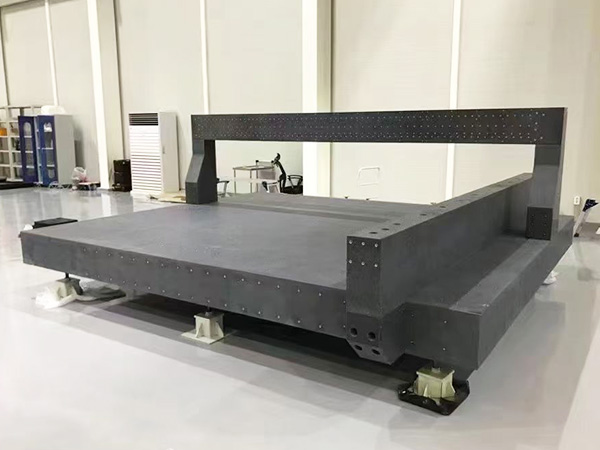
This comparison sets out the practical differences — stability, wear, corrosion, magnetism, clamping, maintenance and reconditioning — and finishes with a straightforward selection guide.
1. What Each Material Does Well
Granite (often referred to in the trade as marble platform or marble surface plate) is a natural stone selected for fine, uniform grain, high hardness and freedom from internal flaws. It does not rust, does not burr when struck, is non-magnetic, and is thermally stable. Cast iron is an engineered material chosen for toughness, damping and the ability to be clamped, threaded and scraped.
| Property | Granite surface plate | Cast iron surface plate |
|---|---|---|
| Corrosion | Will not rust; insensitive to humidity | Rusts if unprotected; needs care in humid shops |
| Impact damage | Chips or spalls; no raised burr | Dents and raises a burr (repairable by dressing) |
| Wear behaviour | Very slow wear; produces fine non-embedding dust | Wears faster; scraped finish holds oil film |
| Magnetism | Non-magnetic, ideal near magnetic equipment | Magnetic; can hold swarf and affect magnetic tools |
| Clamping / T-slots | Can be drilled and bushed for inserts | Naturally accepts clamps, T-slots and threaded holes |
| Thermal response | Low expansion, slow response | Good stability, higher conductivity |
| Reconditioning | Re-lapped by specialist process | Re-scraped or re-machined on site |
| Best environment | Calibration rooms, metrology labs, CMM rooms | Workshop inspection, layout, assembly, welding beds |
2. Accuracy and Long-Term Stability
Both materials are supplied to defined flatness grades, and both hold those grades well if they are supported and handled correctly. The difference is in how they lose accuracy. Granite loses it slowly and evenly through wear; cast iron loses it through local damage — a dent, a burr, or rust in a damp corner.
Granite: no internal stress to relieve, no corrosion, and wear that occurs gradually across the whole surface. That is why granite is favoured where a plate must stay trustworthy for years between verifications.
Cast iron: stable once properly stress-relieved and aged, and the material's damping makes it pleasant to work on with height gauges and indicators. But it must be kept dry and protected from impact.
3. Working Behaviour: How the Surface Feels in Use
Accuracy grades do not capture everything an inspector experiences. Two practical differences matter:
Gauge movement. A scraped cast iron surface retains oil and lets instruments glide; a very flat granite surface can cause gauges to drag slightly, especially in dry conditions.
Dust and wear debris. Granite sheds a very fine powder that does not embed into the workpiece; cast iron swarf can be picked up and transferred, which is why regular cleaning matters more with iron plates.
4. Clamping, Inserts and Custom Features
This is the point where cast iron usually wins. Assembly and layout work often needs clamps, stops, threaded holes or T-slots — features that are straightforward in cast iron. Granite can also be prepared for fixturing: drilled and bushed marble platforms accept threaded inserts, and granite mechanical components are routinely machined into custom bases, beams and brackets for precision equipment.
Choose cast iron where the plate is a working fixture bed as well as a reference.
Choose granite — with drilled and bushed inserts where needed — where the priority is a stable, non-magnetic, corrosion-free reference.
5. Maintenance: What Each Plate Demands
| Task | Granite | Cast iron |
|---|---|---|
| Routine cleaning | Dedicated granite cleaner; wipe dry | Clean and lightly oil or use rust inhibitor |
| Rust protection | Not required | Required in humid environments |
| Edge/impact care | Avoid point impact; chipping is not repairable in place | Dress burrs promptly; dents can be blended |
| Verification | Annual, or per quality system | Annual, or per quality system |
| Reconditioning | Re-lapping by specialists | Re-scraping / re-lapping on site |
6. Selection Guide
Calibration laboratory, gauge room, CMM room: granite surface plate.
Workshop inspection with clamping, layout and marking-out: cast iron surface plate.
Humid or coastal environment without climate control: granite, because it will not rust.
Work near magnetic chucks, magnetic bases or electronic equipment sensitive to magnetism: granite.
Assembly and welding bay where the surface takes abuse: cast iron, or a T-slot plate.
Custom precision bases for optical, semiconductor or measuring machines: granite mechanical components, machined to drawing.
FAQ: Granite vs Cast Iron Measuring Plates
Is granite more accurate than cast iron?
Not inherently. Both are manufactured and verified to defined grades, and a Grade 0 cast iron plate is flatter than a Grade 1 granite plate. Granite's advantage is that it tends to stay accurate longer with less maintenance, because it does not rust or burr.
Can a granite plate be drilled for fixtures?
Yes. Drilled and bushed granite platforms accept threaded inserts for clamping and locating. The inserts should be planned at the design stage, because drilling afterwards is a specialist operation.
Do granite plates need calibration as often?
They still need periodic verification; no reference surface is exempt. In practice, granite plates in controlled environments often hold their grade longer between verifications than cast iron plates in a busy workshop.
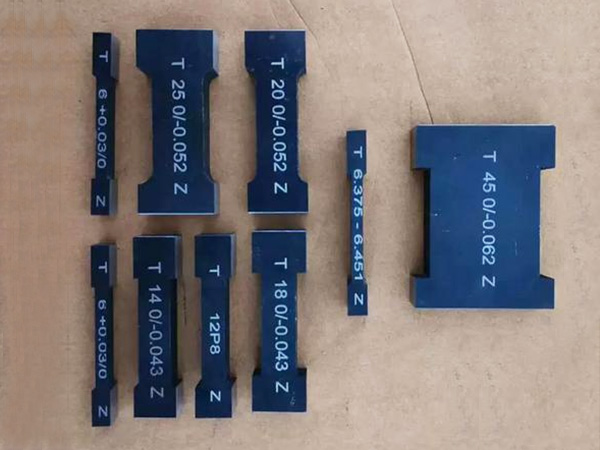
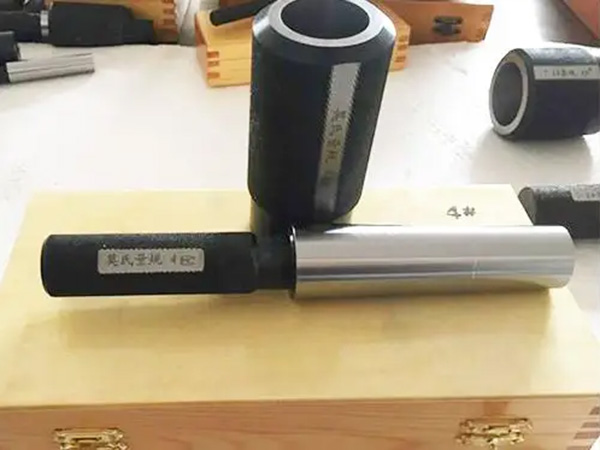
Botou Bozhong supplies granite surface plates, drilled and bushed marble platforms, granite square rulers, right-angle rulers, parallel straightedges and custom granite mechanical components, alongside cast iron plates and machine tool castings. On-site installation, grinding and lapping services are available. Drawings, required grade and working environment are enough for our engineers to recommend the right measuring base.
-
Granite Surface Plate vs Cast Iron Surface Plate: Which Measuring Base Should You Specify?
-
Cast Iron Surface Plate Grades and Accuracy: How to Specify What You Actually Need
-
Cast Iron T-Slot Base Plate: Splicing, Sizes, Load Ratings and Installation
-
Cast Iron 3D Welding Table with Fixtures: A Modular Tooling Guide
-
D16 vs D28 Steel Welding Table: How to Choose the Right Hole System
-
D16 Welding Table Hole System: A Complete Buyer's Guide for Fabrication Shops
Botou Bozhong Precision Machine Tool Co., Ltd.
Copyright © 2025-2026 https://www.bozhong-weldingtable.com. All Rights Reserved Botou Bozhong Precision Machine Tool Co., Ltd.Copyright