






- Navigation -
 Current Location:
NEWS DETAILS
NEWS INFORMATION
Welding Positioner and Modular Welding Table: Combining Rotation With Hole-System Fixturing
AUTHOR:Bozhong Tool DATE:2026-10-29 10:58:53 HITS:128
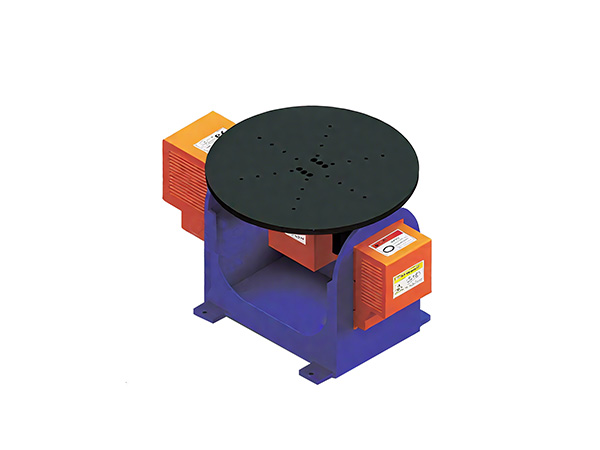
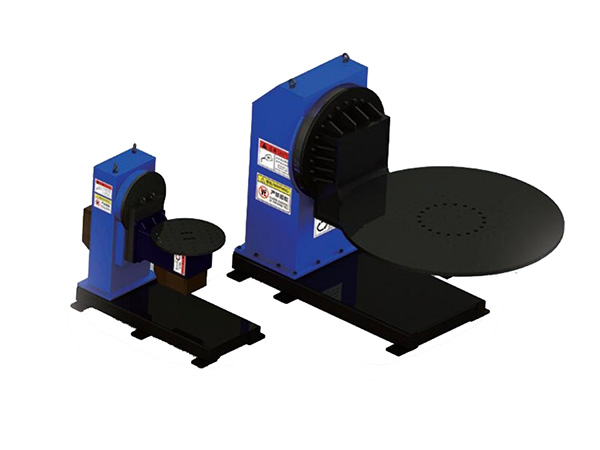
Most welding is done in the position the part happens to land in, which is usually not the position that produces the best weld. Fillet welds welded flat fill faster, penetrate more consistently and look better than the same joint welded vertical or overhead. That is the entire argument for a welding positioner: it turns the workpiece instead of the welder, so the joint is always welded in the flat or horizontal position.
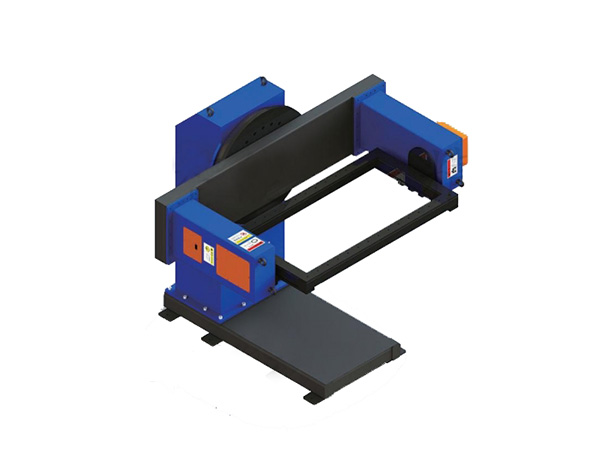
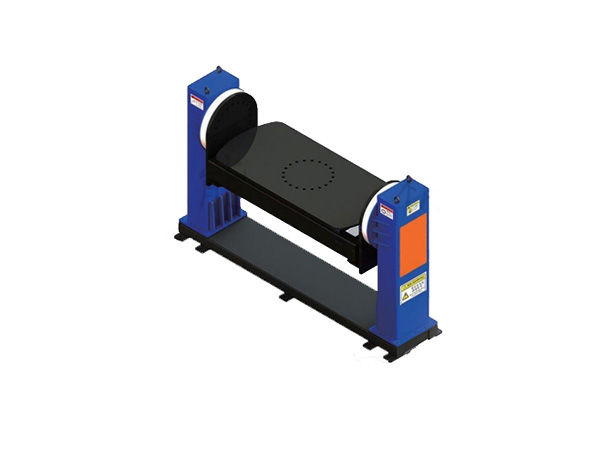
A positioner does not replace a modular welding table — it complements one. The table provides the datums and the clamping; the positioner provides the motion. Understanding how the two interact is what separates a productive cell from an expensive assembly of equipment that nobody uses.
1. What a Positioner Adds, and What It Does Not
Adds: the ability to rotate or tilt the workpiece so that joints are welded in the flat position.
Adds: better and more consistent penetration, because the weld pool is not fighting gravity.
Adds: reduced operator fatigue and faster travel speeds on long seams.
Does not add: accuracy. Positioning accuracy still comes from the fixture, which is the table's job.
Does not add: repeatability between parts unless the workpiece is located on the positioner in a repeatable way.
That last point is where most installations underperform. A positioner spinning a part that is only roughly located produces welds in the right position on the first part and somewhere else on the second. The modular table — or a fixture plate mounted on the positioner — is what makes the location repeatable.
2. When Rotation Pays Off
| Situation | Does rotation help? | Why |
|---|---|---|
| Long circumferential seams on cylinders | Strongly | Continuous welding in the flat position at steady speed |
| Frames and assemblies welded on several faces | Strongly | Eliminates overhead and vertical welding |
| Small brackets welded once | Rarely | Setup time exceeds the benefit |
| Very heavy weldments beyond the positioner rating | No | Safety and load limits apply |
| Repetitive production of the same part | Strongly | The setup investment is amortised over many parts |
| One-off repair work | Sometimes | Depends on access and safety rather than productivity |
3. Load, Centre of Gravity and the Rating You Should Read
Positioner ratings are frequently quoted as a single weight capacity, which is misleading. Three quantities govern whether a given part can be rotated safely and usefully:
Mass: the weight of the workpiece plus the fixture plate and clamps, which together are often heavier than expected.
Centre of gravity distance: how far the mass sits from the faceplate. Rotating capacity falls as this distance grows; the rating is a moment, not a weight.
Eccentric moment: when the centre of gravity is off the axis of rotation, the positioner carries a continuous overturning moment, and the safe capacity drops sharply.
4. Interfacing the Positioner With Hole-System Fixturing
There are three practical ways to combine rotation with modular fixturing, and the choice depends on part size and mix:
Fixture plate on the faceplate: mount a hole-system plate to the positioner and fixture the part to it. Best where several similar parts are rotated.
Sub-assembly on the table, then transfer: fixture and tack on the welding table for accuracy, then move the assembly to the positioner for the final welds. Best where dimensional accuracy matters most.
Positioner alongside the table: the table remains the layout and tacking station; the positioner handles the welding. Best for mixed work and for shops with one positioner serving several cells.
5. Planning the Weld Sequence Around Rotation
Fixture and locate on the table using stops and pins; verify the geometry before any full weld.
Tack at the points that will resist distortion during handling and rotation.
Transfer to the positioner and confirm the fixture is clamped for rotation, not just for gravity.
Check the rotation path is clear and that the load is balanced or within the rated eccentric moment.
Weld in a balanced sequence — alternate sides where possible — so that shrinkage does not pull the assembly out of shape.
Return the assembly to the table for final dimensional check if the part is critical.
6. Selecting a Positioner: Checklist
| Item | What to determine |
|---|---|
| Load and geometry | Maximum mass, centre-of-gravity distance and eccentric moment |
| Rotation and tilt range | Continuous rotation, tilting, or both; and the speeds required |
| Faceplate interface | Hole pattern or T-slots compatible with your existing fixtures |
| Control | Variable speed, foot or pendant control, and emergency stopping |
| Duty cycle | Hours per day and the proportion of time under full load |
| Safety | Guarding, clear swing path, rated lifting points and earthing for the welding circuit |
| Integration | How it will be positioned relative to the welding table and the operator |
7. Common Mistakes
Buying on weight rating alone and ignoring the moment created by an offset centre of gravity.
Using the positioner as a fixture, with the part only roughly located — accurate welds in the wrong place.
Forgetting the weight of the fixture plate and clamps when checking capacity.
Welding without a proper return path for the welding current through the rotary joint.
Rotating an unbalanced load at speed, which is both unsafe and hard on the drive.
Leaving the positioner idle because it is inconveniently located relative to the table.
FAQ: Welding Positioners and Modular Tables
Do I still need a welding table if I have a positioner?
Yes, in almost every shop. The table is where parts are laid out, located and tacked — the operations that decide dimensional accuracy. The positioner is where the welding itself is made easier. They solve different problems.
Can the positioner hold tolerances on its own?
No. A positioner moves the part; it does not locate it. Any tolerance achieved comes from the fixture, which is why hole-system plates or dedicated fixture plates are used on the faceplate.
How do I size a positioner for a mixed workload?
Work from the heaviest and most eccentric recurring part rather than the average, and check the rated moment rather than the weight figure. Then confirm the faceplate pattern will accept the fixtures you already own.
Workpiece mass, dimensions, centre of gravity and the mix of joints to be welded are enough for the engineering team to recommend a positioner configuration and a matching fixture plate.
-
Welding Positioner and Modular Welding Table: Combining Rotation With Hole-System Fixturing
-
Magnesium-Aluminum Straightedge vs Cast Iron Straightedge: Choosing the Right Straight Reference
-
Granite Surface Plate vs Cast Iron Surface Plate: Which Measuring Base Should You Specify?
-
Cast Iron Surface Plate Grades and Accuracy: How to Specify What You Actually Need
-
Machine Tool Leveling Pads and Adjustment Shims: A Practical Installation Guide
-
Sand Casting Parts for Machine Tools: From Pattern to Finished Casting
Botou Bozhong Precision Machine Tool Co., Ltd.
Copyright © 2025-2026 https://www.bozhong-weldingtable.com. All Rights Reserved Botou Bozhong Precision Machine Tool Co., Ltd.Copyright