






- Navigation -
 Current Location:
NEWS DETAILS
NEWS INFORMATION
Flexible Welding Tables vs Fixed Welding Stations — Which Configuration Wins
AUTHOR:Bozhong Tool DATE:2026-08-16 13:29:25 HITS:118
Every fabrication manager who has stood at a production meeting watching delivery deadlines slip because fixture setup consumed more time than welding has asked the same fundamental question: should we invest in flexible modular equipment or double down on dedicated fixed stations? This is not an abstract philosophical debate — it is a practical strategic decision that directly affects throughput, labor efficiency, floor space utilization, and ultimately the cost structure of the fabrication operation.
Flexible welding tables — typically modular grid systems with standardized hole patterns (D16 or D28) and interchangeable clamping elements — and fixed welding stations — purpose-built or purpose-configured workstations with permanent dedicated fixtures for specific part families — represent two fundamentally different approaches to the same problem: how to hold workpieces accurately and repeatably during welding. Neither approach is universally superior. The right choice depends on the specific characteristics of the fabrication operation: production volume, part variety, tolerance requirements, and the capital resources available.
Defining the Two Configurations: What Each System Actually Is
A flexible modular welding table is a precision platform with a standardized grid of holes — most commonly D16 (16 mm pitch) or D28 (28 mm pitch) — into which a variety of standardized clamping elements are inserted to build up custom fixture configurations for each new workpiece. The same table can fixture hundreds or thousands of different part geometries by rearranging blocks, stops, toe clamps, risers, and angle plates. The table is the fixture base; the clamping accessories are the variable elements.
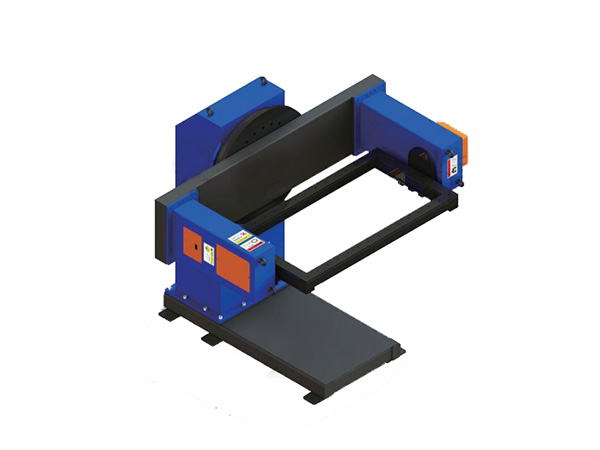
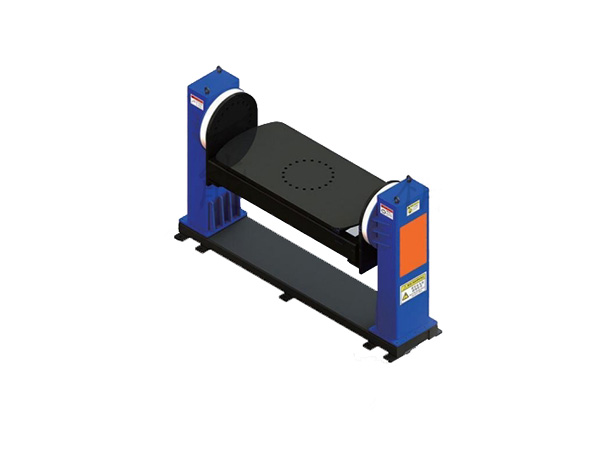
A dedicated fixed welding station is a workstation configured specifically for a single part or part family. The configuration may use a dedicated table with permanently mounted stops and clamps, a purpose-built weld jig or fixture, or a combination of both. Once set up for a part, the station requires minimal changeover between identical parts — the next part of the same type goes directly into the fixture without any setup activity.
Between these two poles exists a spectrum of configurations: modular tables with dedicated sub-fixtures mounted on them (providing flexibility with faster changeover), semi-dedicated stations with adjustable hard stops, and hybrid systems where multiple part families share a common base plate with family-specific inserts. Understanding this spectrum is important because the real-world decision is rarely a binary choice between pure flexibility and pure dedication.
Setup Time: The Central Trade-off
The most frequently cited advantage of a dedicated fixed station over a flexible table is changeover time — or more precisely, the absence of it. A dedicated station for a high-volume part family requires zero changeover time for that part family: operators load the workpiece, weld, and unload. For part families produced in runs of 50, 100, or 500 identical pieces, this changeover elimination can represent hours of recovered production time per shift.
A flexible modular table requires a fixture setup for each new part geometry. For complex assemblies, this setup can take 15–45 minutes for an experienced operator — including layout of support blocks, insertion and positioning of clamping elements, dimensional verification of the fixture, and dry-run fit-check of the first workpiece. For simple parts, a skilled operator can configure a fixture in 5–10 minutes. Over a shift that runs 10–15 different part numbers, this cumulative setup time becomes a significant productivity variable.
However, the setup time equation is more nuanced than it first appears. Dedicated stations require their own setup — when a new part family is introduced to the station, the fixture must be changed, re-verified, and re-qualified. A shop with 10 dedicated stations can handle 10 part families simultaneously without changeover, but adding an 11th part family requires either a new station (capital cost) or a changeover on an existing station (downtime). A shop with 2 flexible tables and a comprehensive clamping kit can theoretically handle unlimited part families on the same equipment — the constraint is operator time, not station count.
Accuracy and Repeatability: Which System Holds Tolerances Better
Accuracy is frequently cited as an advantage of dedicated fixtures — and for the specific parts they are designed for, dedicated fixtures can deliver exceptional repeatability. A purpose-built weld jig that was engineered, built, and inspected to tight tolerances will hold those tolerances for every part it is used to produce, without any operator-dependent positioning variation. For high-volume production of dimension-critical parts — precision equipment frames, structural sub-assemblies for regulated industries — dedicated fixtures are often the only acceptable solution.
Flexible modular tables achieve accuracy through the precision of the grid and the repeatability of standardized clamping elements. A D16 grid table certified to Grade 1 flatness provides a reference surface accurate to 0.003 mm/m. Clamping elements inserted into adjacent grid holes are positioned with the same repeatability as the grid itself — if an operator sets up a fixture at the 100 mm and 200 mm positions on a D16 table, every subsequent setup using those same grid coordinates will position the clamping elements identically. The accuracy of a well-configured flexible fixture is limited primarily by the operator's setup skill and the table's flatness — not by any inherent imprecision in the system.
The comparison breaks down differently for different production contexts. For high-volume identical-part production, a dedicated station wins on repeatability — no operator positioning skill is required; the fixture handles it. For job-shop production with part variety, a precision flexible table with a skilled operator achieves accuracy that no dedicated fixture for a different part family can match.
Cost Structure: Capital, Operational, and Hidden Costs
The cost comparison between flexible and fixed configurations is not as simple as "one table costs X, one dedicated station costs Y." Both systems have cost structures that extend far beyond the initial capital acquisition.
A precision flexible modular welding table (a well-engineered D16 or D28 grid table from a quality manufacturer like Bozhong Tool) represents a one-time capital investment of typically USD 3,000–12,000 depending on size and certification grade. The clamping accessory kit — blocks, stops, clamps, risers — is an additional investment of USD 1,000–5,000 depending on the range of accessories purchased. Once these investments are made, the system can fixture an effectively unlimited range of part geometries without further capital cost, limited only by the accessory inventory and operator skill.
Dedicated stations carry a different cost profile. A purpose-built weld fixture for a specific part family may cost USD 2,000–15,000 depending on complexity. A station built around a dedicated table and fixture may cost as much as or more than a flexible table. The hidden cost is in station proliferation: as the product mix grows, shops with dedicated stations must add stations for new part families or accept changeover downtime. A shop with 20 part families and 5 dedicated stations is spending significant changeover time regardless of the individual station capability.
Operational cost comparison must also consider the skilled operator time invested in fixture setup for flexible tables versus the lower skill requirements for operating a dedicated station. In regions with high labor costs, the time value of skilled setup operators is a meaningful component of the cost equation.
Production Volume and Floor Space: The Operational Fit
Production volume is the variable that most reliably predicts which configuration is appropriate. A useful heuristic: dedicated stations are most cost-effective for part families produced at volumes above 200–300 identical pieces per production run, where the changeover time saved across the production run exceeds the capital and changeover cost of maintaining the dedicated station. Below that threshold, the dedicated station's capital cost per part is too high relative to the flexible table's setup cost.
Flexible modular workstations are most cost-effective in the opposite regime: job shops with high part variety and run sizes typically under 50 pieces. In these environments, the flexibility of the modular table — the ability to fixture any geometry without dedicated hardware — provides maximum value. The setup time is absorbed as part of the job's production time, and the absence of dedicated hardware requirements means no capital tied up in part-specific fixtures for parts that may only be produced once.
Floor space considerations also favor flexible tables in space-constrained shops. A flexible table with a clamping kit provides multiple fixture configurations from a single footprint. A set of 5 dedicated stations for 5 part families consumes 5× the floor space of a single flexible table, and that floor space is dedicated regardless of whether any of the 5 part families is currently in production. A flexible table used for whatever part is currently on the shop floor uses the same footprint to serve all part families.
Making the Decision: A Practical Framework for Fabrication Managers
The decision between flexible and dedicated welding station configurations should be made systematically, not by default or by habit. A practical decision framework asks these questions in sequence:
First: what is the average run volume per part family? If the majority of your production runs are above 200 pieces, dedicated stations or semi-dedicated configurations (modular tables with family-specific sub-fixtures) deserve serious evaluation. If your production is predominantly job-shop — runs under 50 pieces, high variety — a flexible modular system is almost certainly the better investment.
Second: what are your dimensional tolerance requirements? If your parts require tolerances tighter than ±0.5 mm and you produce high volumes of identical parts, dedicated fixtures engineered specifically to those tolerances are the professional choice. If tolerances are commercial (1–3 mm range), a well-set-up flexible table provides adequate accuracy without the dedicated hardware investment.
Third: what is your part variety growth trajectory? A growing product line with expanding part families will progressively stress a dedicated-station model — each new part family requires either a new station or changeover time. A flexible table system scales with the business without capital additions.
Fourth: do your operators have the fixture setup skills required for modular tables? The most sophisticated flexible table is worthless in the hands of an operator who does not understand clamping strategy, fixture stiffness, and distortion control. Investing in operator training is part of the flexible system investment. Shops with less experienced welding workforces may benefit from the lower skill threshold of dedicated stations, at least for their high-volume product families.
The most effective fabrication operations are those that deploy both systems strategically: precision flexible tables in toolroom and pre-production roles, dedicated stations for high-volume production cells, and modular tables configured with semi-permanent family-specific sub-fixtures for the intermediate case. This hybrid approach maximizes the advantages of each configuration while mitigating their individual weaknesses — and it is the model that most experienced fabrication managers ultimately converge on as their operations mature.
American Welding Society (AWS). Structural Welding Code — Steel (AWS D1.1/D1.1M). Miami: AWS, 2020. British Standards Institution. BS EN ISO 9013:2017 — Thermal cutting — Classification of thermal cuts. London: BSI, 2017. Weman, K. Welding Processes Handbook, 2nd ed. Cambridge: Woodhead Publishing, 2012. Kalpakjian, S., and Schmid, S.R. Manufacturing Engineering and Technology, 7th ed. Upper Saddle River: Pearson, 2014. ASME B89.3.4 — American National Standard for the Care and Calibration of Fixed-Length Surface Plates. New York: American Society of Mechanical Engineers, 2009. ISO 1101:2017. Geometrical product specifications (GPS) — Geometrical tolerancing — Tolerances of form, orientation, location and run-out. International Organization for Standardization, 2017. Masubuchi, K. Analysis of Welded Structures: Residual Stresses, Distortion, and Their Consequences. Oxford: Pergamon Press, 1980.References
-
Welding Table Surface Hardness — What Rockwell and Brinell Numbers Mean for Buyers
-
Welding Table Load Capacity — Understanding Static and Dynamic Ratings
-
Modular Welding Table ROI — Calculating Return on Investment for Fabrication Shops
-
Industrial Metrology Basics for Welding Fabrication — Standards, Tools, and Workflows
-
Granite Surface Plate Calibration — Frequency, Methods, and Standards
-
How to Design a Welding Fixture from Scratch — A Step-by-Step Engineering Guide
Botou Bozhong Precision Machine Tool Co., Ltd.
Copyright © 2025-2026 https://www.bozhong-weldingtable.com. All Rights Reserved Botou Bozhong Precision Machine Tool Co., Ltd.Copyright