






- Navigation -
 Current Location:
NEWS DETAILS
NEWS INFORMATION
Pros and Cons of Ultrasonic Cleaning for Granite Platforms in Industrial Production
AUTHOR:Bozhong Tool DATE:2026-02-11 14:54:34 HITS:56
In precision inspection and machining environments, cleanliness is directly linked to accuracy and reliability. A Granite Platform is widely used as a reference base for measurement, layout, and assembly because of its stability and flatness. For any professional Granite Platform manufacturer with stable production and bulk supply capability, maintaining surface integrity is just as important as machining precision.
As production volumes grow and tolerances tighten, cleaning methods for granite platforms become a critical topic. Among the available solutions, ultrasonic cleaning is increasingly discussed as a modern approach to remove contaminants efficiently. However, like any industrial process, ultrasonic cleaning brings both advantages and limitations. Understanding the pros and cons helps manufacturers and users protect granite platforms while supporting long-term production quality.
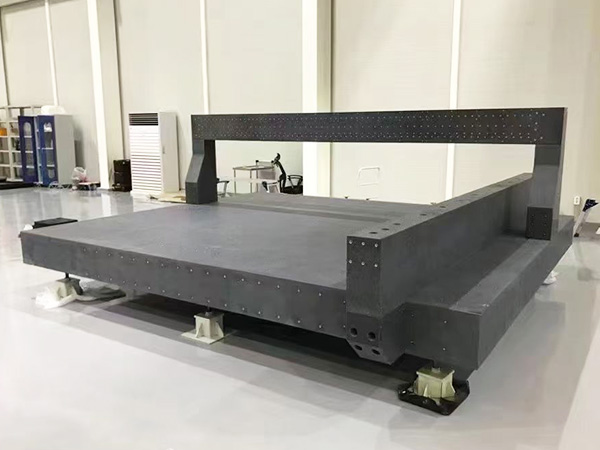
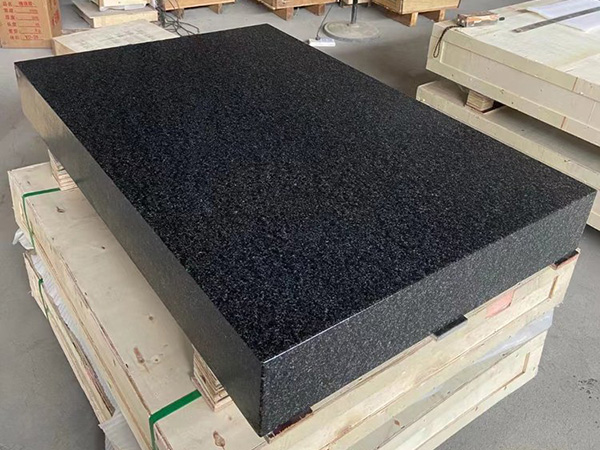
What Is Ultrasonic Cleaning for Granite Platforms?
Ultrasonic cleaning uses high-frequency sound waves transmitted through a liquid medium to create microscopic cavitation bubbles. When these bubbles collapse, they generate tiny forces that lift dirt, oil, particles, and residues from surfaces.
For a granite platform, ultrasonic cleaning targets contaminants trapped in surface pores and micro-textures that are difficult to remove with manual wiping. Compared with traditional cleaning, this method provides uniform contact without heavy mechanical friction.
In modern granite platform production, ultrasonic systems are sometimes used for pre-delivery cleaning, refurbishment, or maintenance to improve surface cleanliness before calibration or inspection tasks.
Why Cleaning Quality Matters in Production
A granite platform serves as the foundation for dimensional measurement and component inspection. Even small dust particles or oil films can affect flatness perception and measurement repeatability.
In production environments, poor cleaning can cause:
·Inaccurate inspection results
·Component misalignment
·Surface contamination transfer
·Reduced calibration reliability
For manufacturers handling batch production and bulk supply of granite platforms, consistent cleaning standards ensure every unit reaches users in optimal condition. Proper cleaning also supports long-term stability and surface integrity.
Pros of Ultrasonic Cleaning for Granite Platforms
1. High Cleaning Efficiency
One of the biggest advantages of ultrasonic cleaning is its ability to remove fine particles from microscopic pores in granite. Traditional wiping may leave residue, while ultrasonic waves penetrate complex surface textures more thoroughly.
For granite platform production, this means surfaces can be cleaned faster and more uniformly, especially before final inspection or packing.
2. Non-Abrasive Process
Unlike brushing or scraping, ultrasonic cleaning does not rely on direct mechanical force. The cavitation process lifts contaminants without scratching the granite surface.
This helps preserve surface flatness and reduces the risk of micro-damage, which is critical for precision platforms used in inspection and layout operations.
3. Improved Consistency in Bulk Processing
For a Granite Platform manufacturer, handling multiple platforms during production requires repeatable processes. Ultrasonic systems allow standardized cleaning cycles for batch quantities.
This improves consistency across bulk supply orders, ensuring all granite platforms receive the same treatment before shipment.
4. Reduced Labor Dependency
Manual cleaning depends heavily on operator skill and time. Ultrasonic cleaning automates much of the process, reducing labor intensity and human variation.
In high-volume production, automation supports stable output and lowers the risk of uneven surface treatment.
5. Better Preparation for Calibration
Clean surfaces are essential before calibration. Ultrasonic cleaning removes oil, dust, and residues that could influence flatness readings.
For manufacturers integrating calibration into granite platform production, ultrasonic cleaning improves the reliability of final inspection data.
Cons of Ultrasonic Cleaning for Granite Platforms
1. Equipment Investment Cost
Ultrasonic cleaning systems require specialized tanks, generators, and temperature control units. For smaller workshops, the initial investment may be higher compared with manual cleaning methods.
A production facility must evaluate whether ultrasonic cleaning fits its output volume and budget strategy.
2. Risk of Improper Chemical Use
Ultrasonic cleaning usually works with cleaning solutions. If the chemicals are too aggressive, they may affect surface finish, seals, or adhesive joints on mounted components.
For a Granite Platform manufacturer, selecting compatible, neutral cleaning agents is essential to avoid long-term surface degradation.
3. Size Limitations
Large granite platforms may exceed the capacity of standard ultrasonic tanks. Custom systems are required for oversized platforms, increasing cost and complexity.
This limits ultrasonic cleaning use for extremely large production platforms unless special equipment is installed.
4. Potential Moisture Retention
After ultrasonic cleaning, water or solution residues can remain in surface pores or edges. Without proper drying, moisture may introduce staining or corrosion to nearby fixtures.
In production environments, additional drying steps must be integrated into the workflow.
5. Not Always Necessary for Daily Maintenance
For routine cleaning, ultrasonic methods may be excessive. Daily dust removal and light oil wiping often do not require ultrasonic systems.
Production managers must balance ultrasonic cleaning with practical maintenance schedules to avoid unnecessary processing.
Comparing Ultrasonic Cleaning with Traditional Methods
Traditional cleaning methods include manual wiping, alcohol-based solutions, air blowing, and microfiber cloths. These approaches are simple and cost-effective for daily use.
However, they often:
Miss deep surface particles
Depend on operator technique
Take longer for large batches
Ultrasonic cleaning excels in periodic deep maintenance and pre-calibration preparation. For granite platform production and bulk supply, combining both methods usually provides the best balance between efficiency and cost control.
Best Practices for Ultrasonic Cleaning in Manufacturing
To maximize benefits while reducing risks, manufacturers should follow:
·Use neutral, granite-safe solutions
·Control ultrasonic frequency and power
·Limit excessive exposure time
·Apply proper drying procedures
·Integrate cleaning with calibration schedules
By treating ultrasonic cleaning as part of the production system rather than a standalone process, granite platform manufacturers improve consistency and surface protection.
When Should Ultrasonic Cleaning Be Used?
Ultrasonic cleaning is most suitable for:
·Pre-delivery preparation
·Post-refurbishment cleaning
·Before precision calibration
·Heavy contamination removal
·Batch processing in production lines
For bulk supply users, ultrasonic cleaning ensures platforms arrive clean, stable, and ready for immediate use in inspection environments.
The Strategic Role of Cleaning in Granite Platform Production
In modern manufacturing, surface preparation is inseparable from accuracy. A Granite Platform is not only a product—it is a precision reference tool. Cleaning directly affects how well it performs in inspection and assembly tasks.
For a professional Granite Platform manufacturer with advanced production systems and bulk supply capability, integrating ultrasonic cleaning at the right stage supports higher product reliability and customer confidence.
Conclusion
Ultrasonic cleaning offers powerful advantages for maintaining granite platforms, especially in terms of deep cleaning, consistency, and preparation for calibration. At the same time, it introduces considerations related to equipment cost, chemical control, size limitations, and workflow integration.
For any Granite Platform manufacturer involved in large-scale production and bulk supply, understanding both the pros and cons helps build a smarter maintenance and delivery strategy. When used correctly, ultrasonic cleaning protects surface integrity, supports precision manufacturing, and enhances long-term production performance of granite platforms.
References
GB/T 7714:Mason T J. Ultrasonic cleaning: An historical perspective[J]. Ultrasonics sonochemistry, 2016, 29: 519-523.
MLA:Mason, Timothy J. "Ultrasonic cleaning: An historical perspective." Ultrasonics sonochemistry 29 (2016): 519-523.
APA:Mason, T. J. (2016). Ultrasonic cleaning: An historical perspective. Ultrasonics sonochemistry, 29, 519-523.
-
Welding Table Surface Hardness — What Rockwell and Brinell Numbers Mean for Buyers
-
Welding Table Load Capacity — Understanding Static and Dynamic Ratings
-
Modular Welding Table ROI — Calculating Return on Investment for Fabrication Shops
-
Industrial Metrology Basics for Welding Fabrication — Standards, Tools, and Workflows
-
Granite Surface Plate Calibration — Frequency, Methods, and Standards
-
How to Design a Welding Fixture from Scratch — A Step-by-Step Engineering Guide
Botou Bozhong Precision Machine Tool Co., Ltd.
Copyright © 2025-2026 https://www.bozhong-weldingtable.com. All Rights Reserved Botou Bozhong Precision Machine Tool Co., Ltd.Copyright