






- Navigation -
 Current Location:
NEWS DETAILS
NEWS INFORMATION
The Evolution and History of Cast Iron Surface Plates
AUTHOR:Bozhong Tool DATE:2025-12-11 20:18:19 HITS:101
Cast Iron Surface Plate: A Timeless Tool That Shaped Modern Precision
The Cast Iron Surface Plate remains one of the most respected foundations in measurement and inspection work. While technology advances at a rapid pace, this tool’s historical roots stretch far back into the early eras of metal crafting, where artisans first realized the importance of having a stable, extremely flat reference plane. From primitive metal blocks to highly engineered precision plates, its evolution mirrors the growth of industrial accuracy.
Today, these plates are produced under refined manufacturer-level production methods, ensuring consistency and reliable performance even when supplied in bulk quantities for large engineering facilities.
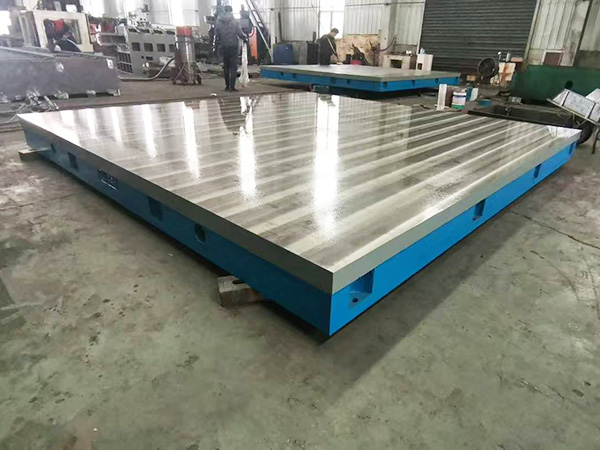
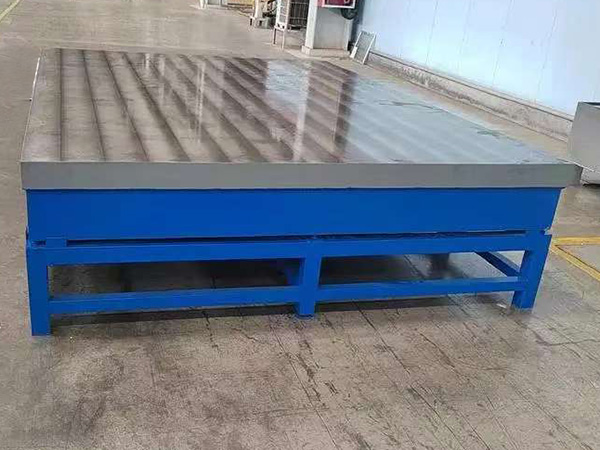
Early Beginnings: The Need for a Reliable Reference Surface
Long before the modern workshop existed, artisans used whatever surfaces they could—stone slabs, wooden benches, or hammered metal boards. Yet none of these delivered the long-term stability needed for accurate measurements. Humidity and wear changed wood; stone chipped easily; handmade metal surfaces lacked uniformity.
As mechanical craftsmanship advanced, especially in Europe and Asia, engineers recognized that a truly flat reference surface was essential for:
·checking part alignment
·marking workpieces
·assessing geometry
·assembling early machines
This recognition became the foundation for what would later develop into the cast iron surface plate.
Industrial Revolution: Flatness Becomes a Science
The Industrial Revolution introduced machine tools, interchangeable parts, and new demands for accuracy that traditional surfaces could not satisfy. This period marked the birth of cast iron as the chosen material for precision plates.
Cast iron became favored because it offered:
·excellent load resistance
·stable geometry over time
·vibration dampening properties
·a surface capable of being hand-scraped
As industries standardized machining operations, the cast iron surface plate became indispensable for calibration, inspection, and layout work.
The Three-Plate Scraping Method: A Breakthrough in Accuracy
One of the most transformative developments was the refinement of hand scraping, a technique that allowed technicians to achieve micrometer-level flatness without advanced machinery.
The three-plate method, still used today, is simple yet brilliant:
1.Plate A is scraped relative to Plate B.
2.Plate B is scraped using Plate C.
3.Plate C is corrected using Plate A.
Through repeated cycles, all three plates naturally converge toward true flatness. This innovation eliminated dependence on a perfect “master plate” and helped spark the rise of precision engineering.
20th Century: Standards, Manufacturing, and Industrial Adoption
By the early 1900s, industries began creating formal standards for surface plates, addressing:
·allowable flatness deviation
·material quality
·weight and support structures
·surface texture
·inspection intervals
At the same time, factories increased the use of cast iron plates for machining alignment, tooling checks, and dimension verification. Improvements in heat treatment and casting design also made plates more stable and longer-lasting.
As Production processes became more controlled, manufacturers were able to produce consistent batches of high-accuracy plates for expanding industrial demands.
Modern Advancements: Engineering Precision Meets Durability
Contemporary cast iron surface plates are the result of decades of refinement. Today’s production process includes:
·engineered cast iron grades
·stress-relief annealing
·machine grinding or milling for preliminary flatness
·multi-step scraping for final precision
·ribbed structural bases to maintain rigidity
·optional T-slots or threaded inserts
These advancements allow plates to withstand heavy machinery, repetitive loading, and complex inspection routines for years.
Why Cast Iron Remains a Preferred Standard
Even with new materials like granite or composite surfaces available, cast iron holds a strong position in many industries due to its unique characteristics:
Excellent Magnetic Compatibility
Magnetic bases, clamps, and indicators attach securely—crucial for tool setup.
High Load Capacity
Cast iron plates support large components and heavy fixtures without distortion.
Long-Term Dimensional Stability
Properly aged cast iron maintains flatness for decades, especially when stored and supported correctly.
Durability Under Impact
Edges and surfaces can withstand accidental scratches or tool drops far better than more brittle materials.
These qualities make cast iron plates ideal for both heavy industrial settings and precision laboratory environments.
Widespread Applications in Modern Industry
Cast iron surface plates remain foundational tools in:
·machine tool installation
·inspection of machined parts
·gauge calibration
·precision assembly
·layout marking
·geometric accuracy checks
Their reliability makes them central to metrology labs, machining workshops, and production floors alike.
What to Consider When Choosing a Cast Iron Surface Plate
Before acquiring a plate—whether for a small workshop or a large factory—important considerations include:
·target accuracy class
·size and thickness
·whether you need T-slots or special inserts
·expected load
·surface maintenance schedule
·available space and support stands
For larger facilities, choosing a supplier with steady bulk supply capability ensures uniformity across all measurement stations.
Conclusion: Cast Iron Surface Plates Continue to Define Precision
The evolution of the Cast Iron Surface Plate is a story of engineering progress, craftsmanship, and the ongoing quest for accuracy. From early metalworking foundations to modern high-precision tools, these plates remain central to measurement, inspection, and machine alignment. With dependable manufacturer-level production and consistent supply, the cast iron surface plate continues to serve as an essential benchmark for precision across industries. Its legacy proves that even in an era of advanced technology, some tools remain irreplaceable.
References
GB/T 7714:Bissacco G, Hansen H N, De Chiffre L. Micromilling of hardened tool steel for mould making applications[J]. Journal of Materials Processing Technology, 2005, 167(2-3): 201-207.
MLA:Bissacco, Giuliano, Hans Nørgaard Hansen, and Leonardo De Chiffre. "Micromilling of hardened tool steel for mould making applications." Journal of Materials Processing Technology 167.2-3 (2005): 201-207.
APA:Bissacco, G., Hansen, H. N., & De Chiffre, L. (2005). Micromilling of hardened tool steel for mould making applications. Journal of Materials Processing Technology, 167(2-3), 201-207.
-
Welding Table Surface Hardness — What Rockwell and Brinell Numbers Mean for Buyers
-
Welding Table Load Capacity — Understanding Static and Dynamic Ratings
-
Modular Welding Table ROI — Calculating Return on Investment for Fabrication Shops
-
Industrial Metrology Basics for Welding Fabrication — Standards, Tools, and Workflows
-
Granite Surface Plate Calibration — Frequency, Methods, and Standards
-
How to Design a Welding Fixture from Scratch — A Step-by-Step Engineering Guide
Botou Bozhong Precision Machine Tool Co., Ltd.
Copyright © 2025-2026 https://www.bozhong-weldingtable.com. All Rights Reserved Botou Bozhong Precision Machine Tool Co., Ltd.Copyright