






- Navigation -
 Current Location:
NEWS DETAILS
NEWS INFORMATION
Quick Clamping Systems for Efficiency in Modern Welding Operations
AUTHOR:Bozhong Tool DATE:2026-07-11 19:13:13 HITS:96
Every second spent positioning and securing a workpiece is a second not spent welding. In high-output fabrication environments, the cumulative effect of slow clamping procedures is a significant drag on productivity and profitability. Quick clamping systems have emerged as a powerful solution to this challenge, offering dramatic reductions in setup time without sacrificing the precision and security that quality welding demands in professional production environments.
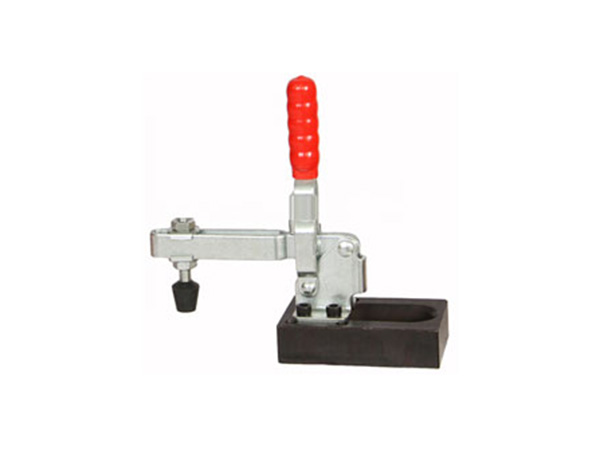
The Traditional Clamping Bottleneck
Conventional welding clamps - C-clamps, friction clamps, and mechanical fasteners - require careful hand positioning, multiple wrench adjustments, and repeated verification to ensure that the workpiece is held securely and accurately before welding can begin. For complex assemblies that require multiple clamp points, this process can consume a substantial portion of the total job time in the daily production environment, slowing throughput and reducing the effective capacity of each workstationand create a significant bottleneck in the production workflow that limits daily output capacity.
Traditional clamps also present significant ergonomic challenges in the workshop environment. Reaching into confined spaces to position and tighten clamps under heavy workpieces is physically demanding and potentially hazardous. Repetitive stress injuries from prolonged wrench use are a recognized occupational health concern in fabrication environments, adding to the hidden costs of traditional clamping methods that are often overlooked in cost calculations.
How Quick Clamping Technology Works
Quick clamping systems use various actuation mechanisms to engage and disengage clamps rapidly, often with a single motion that replaces multiple turns of a wrench. Pneumatic clamping systems use compressed air to power clamp engagement, with release achieved by venting the air supply - a process that takes only a fraction of a second compared to the minutes required for manual wrenching of traditional clamps.
Hydraulic clamps offer similar benefits with the addition of very high clamping forces suitable for heavy-duty applications involving massive workpieces. Mechanical quick-clamp devices use lever, cam, or toggle mechanisms to achieve fast engagement without any external power source, making them suitable for workshops that do not have pneumatic or hydraulic infrastructure available.
Integration with 3D Welding Tables
Quick clamping systems are particularly effective when integrated with 3D welding tables that feature standardized hole patterns. Clamp bases can be positioned anywhere in the grid, and the quick-clamp actuator attaches to the base for instant engagement with no tools required. This combination provides the flexibility of a modular table with the speed of a dedicated fixture system, delivering the best of both approaches in a single workstation.
Many factories develop their own standard configurations for recurring products, with quick-clamp setups pre-positioned for each job type. When a new order arrives, the operator simply places the workpiece in the pre-configured clamp arrangement and begins welding immediately, with no setup time beyond the time required to load the raw material onto the table surface and position it against the pre-set stops.
Precision and Security in Rapid Clamping
A common concern about quick clamping systems is whether they can provide the same level of precision and holding force as traditional manual methods. Modern quick clamps are engineered to deliver clamping forces that meet or exceed those achievable with manual wrenches, and the repeatability of mechanical engagement ensures consistent positioning from one workpiece to the next across large production runs.
Advanced systems incorporate integrated positioning guides and stop features that help operators achieve accurate placement without measurement tools, streamlining the setup process even further. Some clamps include built-in torque limiting to prevent over-clamping and workpiece damage, addressing a common source of quality issues in manual clamping where excessive force distorts thin-walled workpieces during the welding process.
Selecting the Right Clamping System for Your Factory
The best quick clamping system for a given application depends on several factors that must be evaluated carefully: the types and sizes of workpieces produced, the available compressed air or hydraulic infrastructure, the required clamping forces for each application, and the budget available for both initial equipment purchase and ongoing maintenance costs.
Factories should evaluate systems from multiple qualified suppliers and, where possible, conduct trials on actual production workpieces before committing to a specific technology and supplier. A system that works beautifully on a sample part in a controlled test may prove impractical in the realities of daily production use, which is why on-site trials with real production workpieces are always the best evaluation method.
References:
American Welding Society (AWS). Standard Welding Terms and Definitions. AWS A3.0, current edition.
ISO 6943:2015. Welding - Fatigue test for welded joints. International Organization for Standardization.
ASM International. Welding Fundamentals and Processes. ASM Handbook Vol. 6A, 2011.
ESAB. The Fabricator's Guide to Welding Table Selection. ESAB Technical Publications, 2020.
Kalpakjian, S. and Schmid, S. Manufacturing Engineering and Technology. Pearson, 7th edition, 2013.
-
Welding Table Surface Hardness — What Rockwell and Brinell Numbers Mean for Buyers
-
Welding Table Load Capacity — Understanding Static and Dynamic Ratings
-
Modular Welding Table ROI — Calculating Return on Investment for Fabrication Shops
-
Industrial Metrology Basics for Welding Fabrication — Standards, Tools, and Workflows
-
Granite Surface Plate Calibration — Frequency, Methods, and Standards
-
How to Design a Welding Fixture from Scratch — A Step-by-Step Engineering Guide
Botou Bozhong Precision Machine Tool Co., Ltd.
Copyright © 2025-2026 https://www.bozhong-weldingtable.com. All Rights Reserved Botou Bozhong Precision Machine Tool Co., Ltd.Copyright