






- Navigation -
 Current Location:
NEWS DETAILS
NEWS INFORMATION
Achieving Perfect Leveling for Your Welding Table
AUTHOR:Bozhong Tool DATE:2026-01-02 18:55:03 HITS:88
The Importance of Leveling Your Welding Table
Welding tables are fundamental to any welding operation. Whether you're working in a small shop or an industrial setting, the quality and stability of your welding table can significantly impact the accuracy and safety of your projects. Achieving perfect leveling for your welding table is essential for precise welds, structural integrity, and a smoother workflow.
In this article, we’ll explore why leveling is critical for a welding table, the factors that affect its leveling, and how working with a professional manufacturer can help you find the right solution for your needs. We’ll also discuss various methods of leveling and how to choose the right welding table for your workshop or production facility.
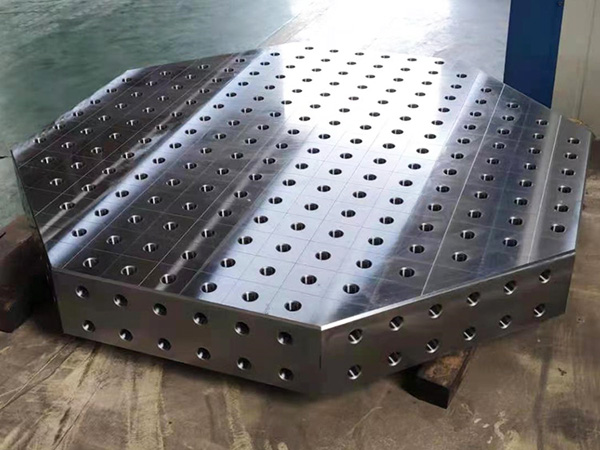
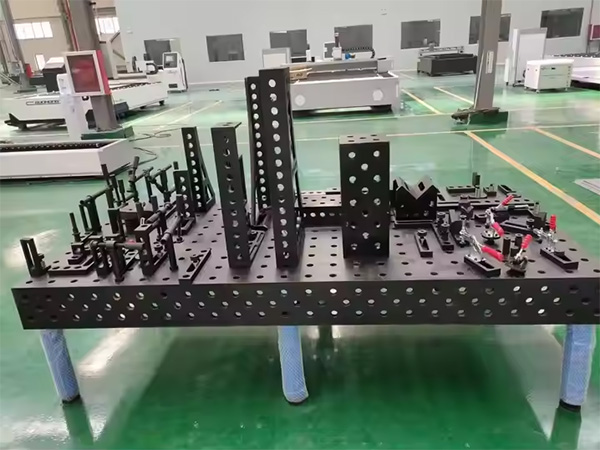
1. Why Leveling Is Crucial for Your Welding Table
A welding table that isn’t level can lead to several issues, including:
·Inaccurate Welds: An uneven surface can distort your workpieces and cause misalignment, resulting in poor-quality welds.
·Safety Hazards: A tilted table may cause your materials to shift or fall, creating potential safety risks.
·Increased Fatigue: A sloped or uneven work surface can make it difficult to maintain comfort and precision, leading to fatigue and slower production.
For these reasons, leveling your welding table ensures a more accurate, efficient, and safer welding process.
2. Factors Affecting Welding Table Leveling
There are several factors to consider when leveling your welding table:
Surface Material and Construction
The material and construction of the welding table can influence its stability. Steel, cast iron, and aluminum are common materials for welding tables, each offering different benefits. Steel is durable and can withstand heavy workloads, while cast iron provides excellent rigidity. Understanding the material and structure of your table will help you identify the best leveling method.
Floor Surface
The surface on which the welding table sits plays a significant role in leveling. If the floor is uneven, it can make it difficult to achieve a perfectly level work surface. Concrete floors are common, but they may have slight imperfections, making it necessary to use leveling feet or pads to adjust the height of the table.
Weight Distribution
Uneven weight distribution can cause a welding table to shift or tilt during use. A welding table with a flat, evenly distributed weight will help maintain its level and provide consistent results during welding tasks.
3. Methods for Leveling a Welding Table
There are various methods to ensure your welding table is level. Depending on the size, weight, and material of your table, you may need to use different techniques:
Adjustable Leveling Feet
One of the most common and effective methods for leveling a welding table is using adjustable leveling feet. These feet can be screwed in or out to fine-tune the height of each corner of the table. They are available for most standard welding tables and are easy to install.
Shims and Pads
In some cases, shims or leveling pads can be used to raise one side of the table and compensate for any unevenness in the floor surface. Shims are typically made from metal, wood, or rubber and can be adjusted to achieve the desired height.
Laser Leveling Tools
For precision leveling, you can use a laser leveling tool. These devices project a laser line to guide you in adjusting the height of your welding table accurately. This method is ideal for larger workspaces or when extreme accuracy is required.
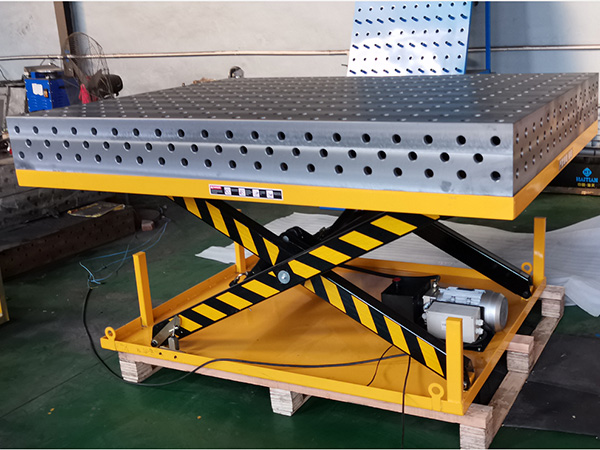
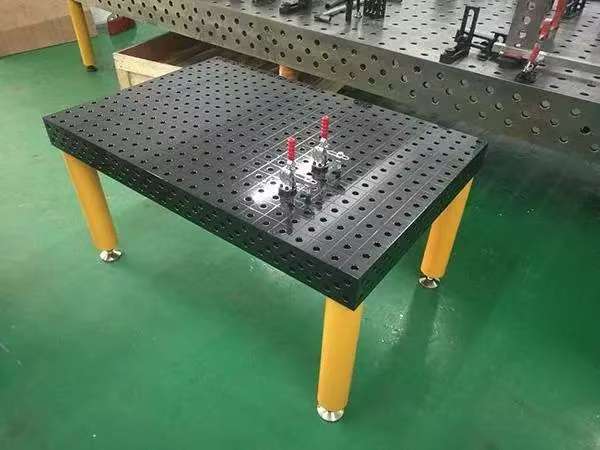
4. Choosing the Right Welding Table for Your Needs
Selecting the right welding table can make a big difference in your leveling efforts. When shopping for a welding table, consider the following:
Size and Weight Capacity
Choose a welding table with an appropriate size and weight capacity for your work. A larger table may require additional leveling adjustments to ensure uniformity, while a smaller, more portable table may have built-in adjustable feet for easier leveling.
Material and Surface Finish
The material and surface finish of your table affect not only its durability but also its ease of leveling. A smooth surface will make it easier to adjust the height, while a rough or uneven surface may complicate the leveling process.
Customization and Features
Many manufacturers offer custom welding tables with specialized features such as integrated clamps, adjustable workstations, or built-in tool holders. Custom solutions can address specific needs in your workspace and make leveling easier by providing more control over the work surface.
5. Working with a Welding Table Manufacturer
When investing in a welding table, working with a manufacturer that specializes in high-quality welding tables can ensure that you get a product tailored to your needs. A professional manufacturer can provide:
·Custom Solutions: Tailored welding tables that meet specific size, weight, and material requirements for your workspace.
·Bulk Production: For larger operations, manufacturers can provide batch production of welding tables, ensuring uniformity and cost efficiency.
·Durability and Quality Assurance: Professional manufacturers use high-grade materials and precise manufacturing processes to ensure the table remains stable, durable, and easy to level.
6. Maintaining the Level of Your Welding Table
Leveling your welding table isn’t a one-time task. Over time, wear and tear can affect the levelness of the table. Regular maintenance is essential to ensure consistent performance:
·Inspect Leveling Feet Regularly: Check that the adjustable feet are still securely in place and functioning properly.
·Re-level as Needed: Periodically recheck the level using a bubble level or laser tool to maintain optimal conditions for your work.
·Address Floor Unevenness: If the floor has settled or shifted, you may need to readjust your leveling method or use additional shims.
Conclusion: Perfect Leveling for Maximum Efficiency
Achieving perfect leveling for your welding table is essential for optimal welding performance. By considering factors like surface material, floor condition, and weight distribution, you can select the right method to level your table and maintain consistency. Working with a trusted welding table manufacturer can also provide customized solutions and ensure the long-term durability of your equipment.
By investing in quality tables and regular maintenance, you can ensure that your workspace remains productive, efficient, and safe. Whether you're a professional welder or a hobbyist, leveling your welding table is an investment in both the precision of your work and the longevity of your equipment.
References
GB/T 7714:Messler Jr R W. Principles of welding: processes, physics, chemistry, and metallurgy[M]. John Wiley & Sons, 2024.
MLA:Messler Jr, Robert W. Principles of welding: processes, physics, chemistry, and metallurgy. John Wiley & Sons, 2024.
APA:Messler Jr, R. W. (2024). Principles of welding: processes, physics, chemistry, and metallurgy. John Wiley & Sons.
-
Welding Table Surface Hardness — What Rockwell and Brinell Numbers Mean for Buyers
-
Welding Table Load Capacity — Understanding Static and Dynamic Ratings
-
Modular Welding Table ROI — Calculating Return on Investment for Fabrication Shops
-
Industrial Metrology Basics for Welding Fabrication — Standards, Tools, and Workflows
-
Granite Surface Plate Calibration — Frequency, Methods, and Standards
-
How to Design a Welding Fixture from Scratch — A Step-by-Step Engineering Guide
Botou Bozhong Precision Machine Tool Co., Ltd.
Copyright © 2025-2026 https://www.bozhong-weldingtable.com. All Rights Reserved Botou Bozhong Precision Machine Tool Co., Ltd.Copyright