






- Navigation -
 Current Location:
NEWS DETAILS
NEWS INFORMATION
The Role of Automation in Machine Tool Castings Manufacturing
AUTHOR:Bozhong Tool DATE:2025-12-18 21:00:29 HITS:58
Automation and the Evolution of Machine Tool Castings
In the modern manufacturing landscape, machine tool castings form the structural foundation of CNC machines, machining centers, and industrial equipment. As performance requirements continue to rise, manufacturers are increasingly turning to automation to enhance production efficiency, precision, and consistency. Automation is no longer an optional upgrade—it has become a strategic necessity for machine tool castings manufacturing.
From a manufacturer-focused production perspective, automation enables scalable output, stable quality, and reliable bulk supply, all of which are critical for meeting global demand.
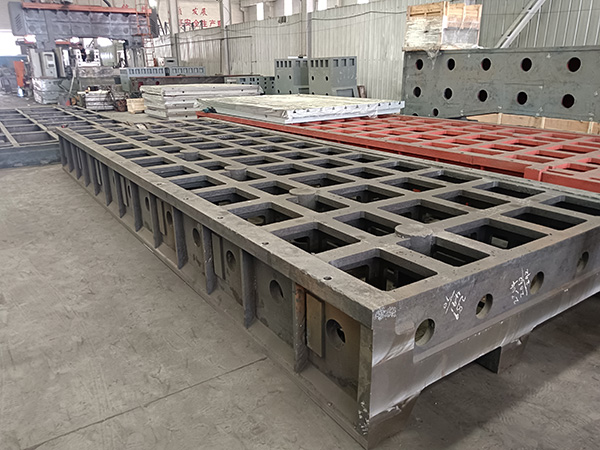
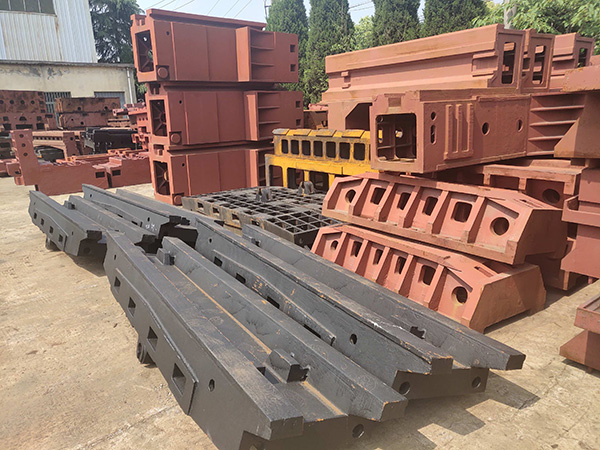
What Are Machine Tool Castings?
Machine tool castings are typically made from gray iron or ductile iron and serve as the core structural components of machine tools. These castings provide rigidity, vibration damping, and long-term dimensional stability.
Common applications include:
·Machine beds
·Columns and bases
·Cross slides and tables
·Structural frames
Due to their size and complexity, machine tool castings demand controlled production processes and strict quality standards—areas where automation delivers measurable advantages.
Why Automation Matters in Casting Production
Traditional casting production relies heavily on manual operations, which can introduce variability. Automation helps standardize key processes, ensuring repeatable results across large production volumes.
Automation improves:
·Process consistency
·Dimensional accuracy
·Cycle time efficiency
·Workplace safety
For machine tool castings manufacturers operating at scale, automated production systems are essential for maintaining competitive lead times and stable supply.
Automated Pattern Making and Mold Preparation
Automation begins at the pattern and mold preparation stage. CNC-machined patterns ensure high dimensional accuracy and repeatability. Automated molding lines further reduce human error and improve mold density control.
Benefits include:
·Uniform mold compaction
·Reduced scrap rates
·Faster mold changeovers
These advantages directly impact the quality and surface finish of machine tool castings produced in batch manufacturing environments.
Robotic Pouring and Metal Handling
One of the most critical stages in casting production is molten metal handling. Robotic pouring systems allow precise control over pouring speed, temperature, and volume.
Key advantages:
·Improved metallurgical consistency
·Reduced risk of defects such as cold shuts and porosity
·Enhanced worker safety
For large and heavy machine tool castings, automation ensures controlled and repeatable pouring conditions that manual methods cannot consistently achieve.
Automation in Cooling and Solidification Control
Controlled cooling is essential to minimize internal stress and distortion in machine tool castings. Automated cooling systems monitor temperature gradients and adjust cooling cycles accordingly.
This level of control:
·Enhances dimensional stability
·Reduces post-machining deformation
·Improves overall casting reliability
Such automation is especially valuable for manufacturers producing castings in bulk for high-precision machine tools.
CNC Machining and Automated Finishing
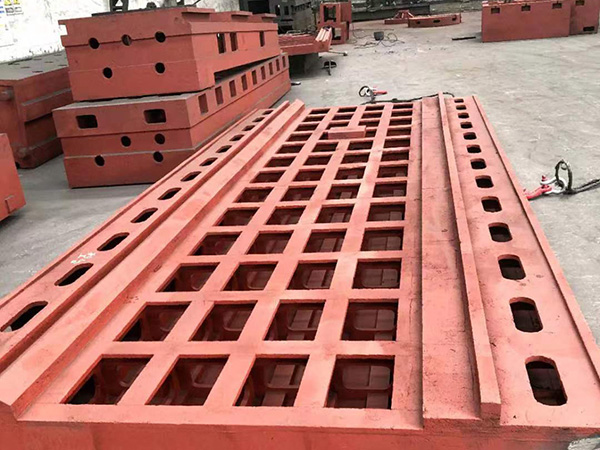
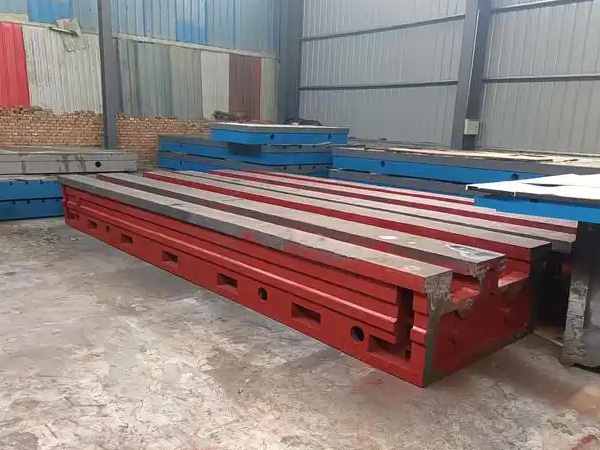
After casting, machine tool castings undergo machining and surface finishing. Automated CNC machining centers ensure precise removal of material while maintaining tight tolerances.
Automation in finishing operations includes:
·Robotic grinding and deburring
·Automated shot blasting
·Consistent surface treatment
These processes support uniform quality across production batches, which is essential for large-scale machine tool castings supply.
Quality Inspection and Digital Monitoring
Automation extends into inspection and quality control. Coordinate measuring machines (CMMs), laser scanning, and digital monitoring systems enable real-time data collection.
Benefits of automated inspection:
·Early defect detection
·Statistical process control
·Traceability across production batches
For machine tool castings manufacturers, digital quality systems help ensure every component meets structural and dimensional requirements before shipment.
Supporting Bulk Supply and Production Scalability
Automation plays a critical role in enabling bulk production of machine tool castings. By reducing manual intervention and optimizing workflow, manufacturers can scale output without compromising quality.
Production-scale automation supports:
·Stable long-term supply agreements
·Reduced per-unit production costs
·Predictable delivery schedules
This reliability is especially important for OEMs and distributors sourcing machine tool castings in large quantities.
Challenges and Strategic Investment in Automation
While automation offers clear benefits, it also requires significant investment and technical expertise. Manufacturers must carefully integrate automated systems with existing production workflows.
Key considerations include:
·Equipment compatibility
·Workforce training
·Maintenance planning
When implemented strategically, automation delivers long-term returns in productivity, quality, and supply stability.
Conclusion: Automation as a Competitive Advantage
The role of automation in machine tool castings manufacturing continues to expand as market expectations evolve. From mold preparation to inspection, automated systems enhance precision, efficiency, and scalability.
By partnering with a machine tool castings manufacturer that emphasizes automated production and bulk supply capabilities, buyers gain access to consistent quality, dependable delivery, and long-term manufacturing reliability. Automation is no longer just a technological upgrade—it is a defining factor in modern machine tool castings production.
References
GB/T 7714:Campbell J. Complete casting handbook: metal casting processes, metallurgy, techniques and design[M]. Butterworth-Heinemann, 2015.
MLA:Campbell, John. Complete casting handbook: metal casting processes, metallurgy, techniques and design. Butterworth-Heinemann, 2015.
APA:Campbell, J. (2015). Complete casting handbook: metal casting processes, metallurgy, techniques and design. Butterworth-Heinemann.
-
Welding Table Surface Hardness — What Rockwell and Brinell Numbers Mean for Buyers
-
Welding Table Load Capacity — Understanding Static and Dynamic Ratings
-
Modular Welding Table ROI — Calculating Return on Investment for Fabrication Shops
-
Industrial Metrology Basics for Welding Fabrication — Standards, Tools, and Workflows
-
Granite Surface Plate Calibration — Frequency, Methods, and Standards
-
How to Design a Welding Fixture from Scratch — A Step-by-Step Engineering Guide
Botou Bozhong Precision Machine Tool Co., Ltd.
Copyright © 2025-2026 https://www.bozhong-weldingtable.com. All Rights Reserved Botou Bozhong Precision Machine Tool Co., Ltd.Copyright