






- Navigation -
 Current Location:
NEWS DETAILS
NEWS INFORMATION
Are Welding Table Mats a Necessity?
AUTHOR:Bozhong Tool DATE:2025-12-19 23:15:02 HITS:115
Welding Table Protection in Modern Production
In industrial fabrication and metalworking environments, the welding table is one of the most frequently used and heavily stressed work surfaces. While welding tables are designed for strength and durability, direct exposure to heat, spatter, and mechanical impact can gradually degrade their surface quality. This has led many manufacturers and workshops to consider whether welding table mats are a necessity or simply an optional accessory.
From a manufacturer and production-scale perspective, welding table mats are increasingly viewed as a practical investment rather than an added cost. Their role in protecting equipment, improving workflow consistency, and supporting bulk production environments deserves closer examination.
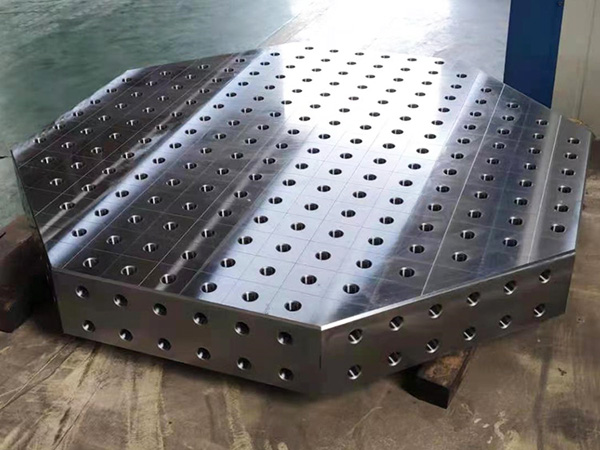
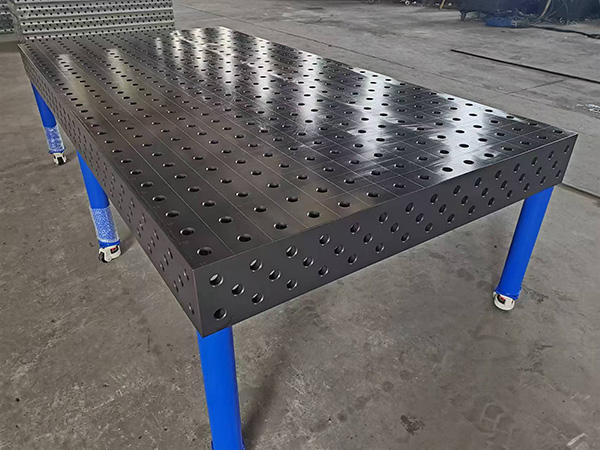
What Are Welding Table Mats?
Welding table mats are protective layers placed on top of welding tables to shield the surface from sparks, molten metal, scratches, and thermal stress. They are typically made from heat-resistant materials designed to withstand repeated welding operations.
Common characteristics include:
·High heat tolerance
·Resistance to welding spatter
·Non-slip surface properties
·Compatibility with standard welding table dimensions
In production-oriented facilities, mats are often standardized to fit welding tables used across multiple workstations.
Why Welding Table Protection Matters
A welding table is a long-term asset in any fabrication shop. Without surface protection, repeated welding can cause:
·Surface pitting from spatter
·Warping due to localized heat
·Reduced flatness and accuracy
·Increased maintenance requirements
For manufacturers operating multiple welding stations, even minor surface damage can accumulate into significant refurbishment or replacement costs. Welding table mats help extend the usable life of welding tables, supporting stable production output.
Safety Considerations in Welding Operations
Safety is a primary concern in welding environments. Welding table mats contribute to safer working conditions by:
·Reducing the risk of molten metal adhering to table surfaces
·Minimizing sharp surface defects caused by spatter buildup
·Improving workpiece stability during welding
From a production standpoint, safer work surfaces translate into fewer disruptions, lower injury risks, and more consistent workflow.
Impact on Production Efficiency
In high-volume welding operations, efficiency depends on repeatability and reduced downtime. Welding table mats support production efficiency by:
·Simplifying cleanup between welding cycles
·Maintaining a consistent working surface
·Reducing the need for surface grinding or repair
For a welding table manufacturer supplying equipment in bulk, mats are often recommended as part of a complete production-ready solution.
Cost Considerations: Prevention vs. Replacement
Some workshops hesitate to use welding table mats due to perceived additional costs. However, from a manufacturer’s perspective, mats represent a preventive investment.
When comparing costs:
·Replacing or resurfacing a welding table is expensive and time-consuming
·Production downtime impacts delivery schedules
·Surface damage may affect welding accuracy
In contrast, welding table mats are relatively low-cost components that help preserve core equipment over long production cycles.
Standardization in Bulk Production Environments
In batch production settings, standardization is essential. Welding table mats allow manufacturers to maintain uniform working conditions across multiple welding tables.
Benefits of standardization include:
·Predictable welding results
·Simplified training for operators
·Easier maintenance planning
Manufacturers with bulk production capabilities often design mats that integrate seamlessly with standardized welding table systems.
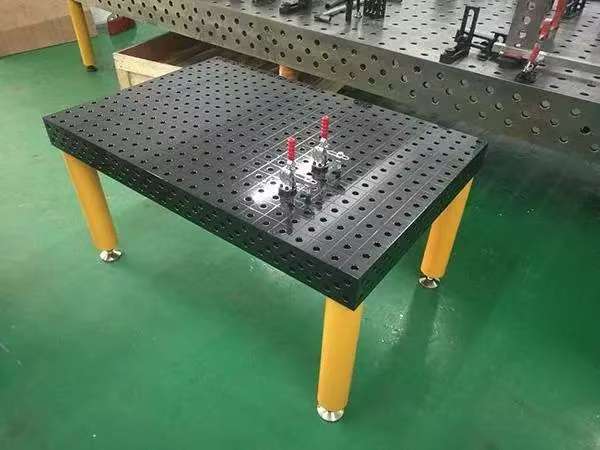
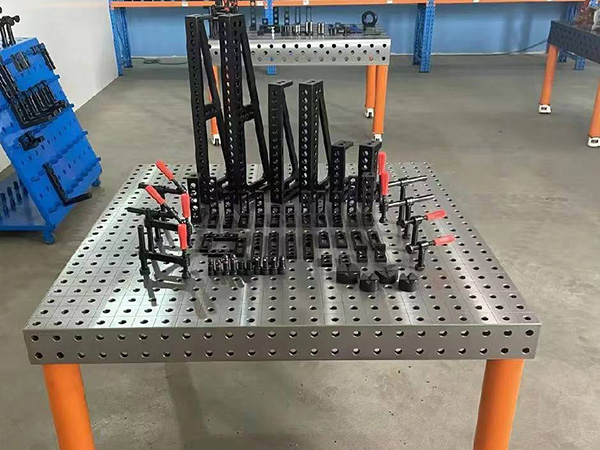
Durability and Material Performance
The effectiveness of welding table mats depends on material quality and manufacturing standards. Professional production-oriented manufacturers focus on:
·Heat-resistant composites
·Long-term dimensional stability
·Resistance to wear and deformation
High-quality mats maintain performance over repeated welding cycles, making them suitable for industrial-scale use rather than temporary protection.
Are Welding Table Mats Always Necessary?
Not every application requires a welding table mat. Low-frequency or light-duty welding tasks may not justify additional protection. However, in professional environments where welding tables are used continuously, mats become increasingly valuable.
For manufacturers supplying welding tables to industrial clients, mats are often positioned as a recommended accessory for long-term equipment protection and production reliability.
Conclusion: A Practical Addition to Welding Table Systems
So, are welding table mats a necessity? In many industrial and production-driven environments, the answer is yes. While welding tables are built for durability, mats provide an additional layer of protection that supports safety, efficiency, and equipment longevity.
From both the beginning and end of the supply chain, working with a welding table manufacturer that understands production demands and bulk supply requirements ensures that welding table systems are optimized for real-world use. Welding table mats are not just accessories—they are practical tools that help maintain consistent production quality over time.
References
GB/T 7714:Antonini J M. Health effects of welding[J]. Critical reviews in toxicology, 2003, 33(1): 61-103.
MLA:Antonini, James M. "Health effects of welding." Critical reviews in toxicology 33.1 (2003): 61-103.
APA:Antonini, J. M. (2003). Health effects of welding. Critical reviews in toxicology, 33(1), 61-103.
-
Welding Table Surface Hardness — What Rockwell and Brinell Numbers Mean for Buyers
-
Welding Table Load Capacity — Understanding Static and Dynamic Ratings
-
Modular Welding Table ROI — Calculating Return on Investment for Fabrication Shops
-
Industrial Metrology Basics for Welding Fabrication — Standards, Tools, and Workflows
-
Granite Surface Plate Calibration — Frequency, Methods, and Standards
-
How to Design a Welding Fixture from Scratch — A Step-by-Step Engineering Guide
Botou Bozhong Precision Machine Tool Co., Ltd.
Copyright © 2025-2026 https://www.bozhong-weldingtable.com. All Rights Reserved Botou Bozhong Precision Machine Tool Co., Ltd.Copyright