






- Navigation -
 Current Location:
NEWS DETAILS
NEWS INFORMATION
Applying Vibratory Finishing to Cast Iron Surface Plates
AUTHOR:Bozhong Tool DATE:2026-01-07 16:17:18 HITS:138
Surface Quality Requirements for Precision Plates
Precision measurement and machining rely heavily on accurate reference surfaces. The Cast Iron Surface Plate plays a critical role in inspection, layout, and calibration tasks across manufacturing and metrology environments. While casting and machining establish the basic geometry of a surface plate, finishing processes are essential for achieving the required surface integrity.
One finishing method increasingly discussed in industrial applications is vibratory finishing. When properly applied, vibratory finishing can enhance surface consistency, remove minor imperfections, and support long-term performance of cast iron surface plates.
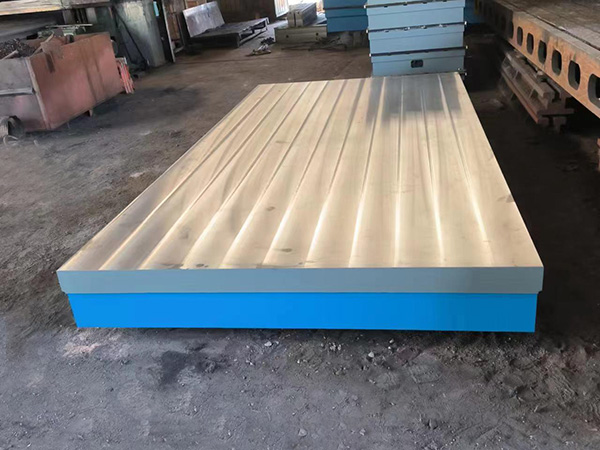
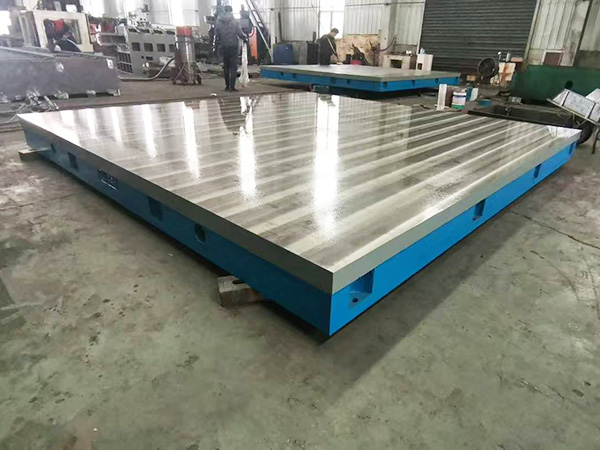
What Is a Cast Iron Surface Plate?
A Cast Iron Surface Plate is a precision reference tool manufactured from high-quality cast iron and used as a flat datum surface. These plates are commonly employed in inspection rooms, machine shops, and production environments where dimensional accuracy is critical.
Cast iron is favored for surface plates due to its excellent vibration damping, wear resistance, and dimensional stability. However, achieving the desired surface condition requires controlled finishing processes after casting and machining.
Understanding Vibratory Finishing Technology
Vibratory finishing is a mass finishing process in which workpieces are placed in a vibrating container filled with abrasive or polishing media. The vibratory motion causes continuous contact between the media and the workpiece surface, resulting in controlled material removal or surface smoothing.
Unlike aggressive grinding methods, vibratory finishing provides uniform treatment across exposed surfaces, making it suitable for components requiring consistent surface texture rather than heavy stock removal.
Why Apply Vibratory Finishing to Cast Iron Surface Plates?
Applying vibratory finishing to a Cast Iron Surface Plate offers several functional advantages when integrated correctly into the production process:
·Removal of minor surface burrs and sharp edges
·Improvement of surface texture uniformity
·Reduction of micro-scale casting or machining marks
·Enhanced cleanliness prior to final inspection
These benefits contribute to improved usability and long-term stability of the surface plate.
Integration into the Manufacturing Process
From a manufacturer perspective, vibratory finishing is typically introduced after rough machining and prior to final precision operations. This positioning allows the process to improve surface condition without affecting critical dimensional tolerances.
Within a controlled production workflow, vibratory finishing serves as a preparatory step that reduces variability before hand scraping, lapping, or final surface correction. For facilities supporting bulk supply of cast iron surface plates, standardized finishing cycles help maintain consistent surface quality across batches.
Media Selection for Cast Iron Surface Plates
The effectiveness of vibratory finishing depends heavily on media selection. For cast iron components, commonly used media include:
·Ceramic media for moderate surface refinement
·Plastic media for lighter deburring
·Specialized polishing media for surface smoothing
Media size, shape, and abrasive composition must be carefully chosen to avoid excessive material removal or surface deformation.
Process Parameters and Control
Key parameters influencing vibratory finishing results include vibration frequency, amplitude, cycle time, and media-to-part ratio. Improper parameter settings may lead to uneven finishing or unintended edge rounding.
For Cast Iron Surface Plates, process control focuses on maintaining surface consistency while preserving flatness. Monitoring and repeatability are essential, especially when finishing larger plates with substantial surface area.
Impact on Surface Integrity and Performance
When correctly applied, vibratory finishing improves surface integrity without compromising structural performance. By reducing surface irregularities, the process supports more uniform contact during measurement tasks and reduces localized wear during repeated use.
Additionally, smoother surfaces are easier to clean and less prone to debris accumulation, which contributes to measurement reliability over time.
Vibratory Finishing vs Traditional Finishing Methods
Traditional finishing methods for cast iron surface plates often include manual scraping, grinding, or lapping. While these methods remain essential for achieving high-precision flatness, vibratory finishing offers complementary benefits.
Compared to purely manual techniques, vibratory finishing provides:
·Greater consistency across large surfaces
·Reduced labor intensity for preliminary finishing
·Improved process repeatability
Rather than replacing traditional methods, vibratory finishing enhances overall finishing efficiency when integrated strategically.
Quality Control Considerations
Quality control remains critical after vibratory finishing. Surface roughness measurements, visual inspections, and flatness verification ensure that finishing objectives have been met.
Any finishing process applied to a Cast Iron Surface Plate must support—not undermine—its role as a precision reference tool. Documentation and traceability within the finishing workflow help maintain consistent quality outcomes.
Maintenance and Long-Term Benefits
Surface plates that undergo controlled vibratory finishing often demonstrate improved resistance to localized wear during service. A more uniform surface texture helps distribute contact stresses evenly, reducing the likelihood of premature surface degradation.
Over time, this contributes to extended service intervals and reduced recalibration frequency.
Conclusion: Enhancing Surface Plates Through Controlled Finishing
Applying vibratory finishing to a Cast Iron Surface Plate is a practical approach to improving surface consistency and usability when integrated correctly into the manufacturing process. By removing minor imperfections and refining surface texture, vibratory finishing supports precision, durability, and long-term performance.
When combined with proper machining, inspection, and quality control practices, vibratory finishing becomes a valuable step in producing reliable cast iron surface plates for demanding industrial applications.
References
GB/T 7714:Kalpakjian S. Manufacturing processes for engineering materials[M]. Pearson Education India, 1985.
MLA:Kalpakjian, Serope. Manufacturing processes for engineering materials. Pearson Education India, 1985.
APA:Kalpakjian, S. (1985). Manufacturing processes for engineering materials. Pearson Education India.
-
Welding Table Surface Hardness — What Rockwell and Brinell Numbers Mean for Buyers
-
Welding Table Load Capacity — Understanding Static and Dynamic Ratings
-
Modular Welding Table ROI — Calculating Return on Investment for Fabrication Shops
-
Industrial Metrology Basics for Welding Fabrication — Standards, Tools, and Workflows
-
Granite Surface Plate Calibration — Frequency, Methods, and Standards
-
How to Design a Welding Fixture from Scratch — A Step-by-Step Engineering Guide
Botou Bozhong Precision Machine Tool Co., Ltd.
Copyright © 2025-2026 https://www.bozhong-weldingtable.com. All Rights Reserved Botou Bozhong Precision Machine Tool Co., Ltd.Copyright