






- Navigation -
 Current Location:
NEWS DETAILS
NEWS INFORMATION
Understanding Welding Table Weight Capacity: Key Information
AUTHOR:Bozhong Tool DATE:2026-01-15 15:43:14 HITS:61
Why Welding Table Weight Capacity Matters
A welding table is the foundation of many fabrication, metalworking, and industrial assembly processes. Whether used in heavy structural welding or precision fabrication, weight capacity directly affects safety, accuracy, and long-term durability. Understanding how welding table weight capacity is determined helps users choose the right solution for their workload while avoiding structural failure or workplace hazards.
From the perspective of a welding table manufacturer with stable production capabilities, load-bearing performance is not a single specification—it is the result of design, material selection, and controlled factory manufacturing processes. This article explains the key factors that influence welding table weight capacity and why they matter in real-world applications.
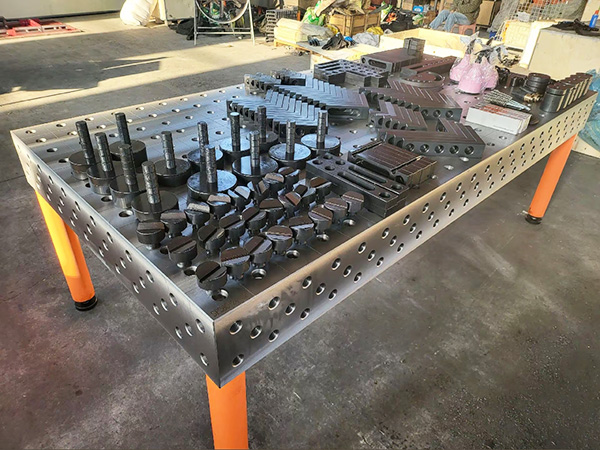
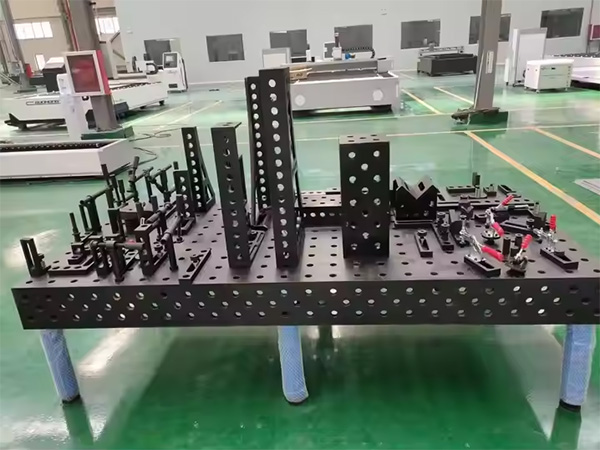
What Is Welding Table Weight Capacity?
Welding table weight capacity refers to the maximum load a welding table can safely support without deformation, instability, or structural damage. This includes:
The weight of workpieces
Fixtures, clamps, and tooling
Dynamic forces during welding, grinding, or assembly
Unlike static furniture, a welding table must handle concentrated loads, uneven distribution, and repeated thermal stress. As a result, rated capacity is determined through engineering analysis and manufacturing validation rather than simple material thickness alone.
Key Factors That Determine Welding Table Load Capacity
1. Tabletop Thickness and Material
The tabletop is the primary load-bearing surface. Thicker steel plates naturally provide higher stiffness and resistance to bending. Common industrial welding tables use precision-machined steel plates designed to maintain flatness under heavy loads.
From a factory production standpoint, consistent plate thickness and controlled material sourcing are essential for ensuring every welding table meets its rated capacity.
2. Internal Reinforcement Structure
Beneath the tabletop, internal ribbing or frame structures distribute weight across the table. Well-designed reinforcement prevents localized stress concentration, which is a common cause of deformation over time.
Professional welding table production focuses heavily on internal frame geometry, as this directly impacts long-term load stability.
3. Leg Design and Support Configuration
The legs or support base play a critical role in overall weight capacity. Factors include:
Number of legs
Leg thickness and cross-section
Connection method between legs and tabletop
A well-balanced support system ensures even load transfer to the ground, reducing the risk of tipping or structural fatigue.
4. Welding and Assembly Quality
The quality of weld joints within the table structure directly affects load-bearing performance. Poor welding can introduce weak points that reduce actual capacity, even if the design appears robust.
This is why controlled factory production and standardized welding procedures are essential when manufacturing heavy-duty welding tables in volume.
5. Load Distribution vs Maximum Load
Weight capacity ratings typically assume even load distribution. Concentrated loads—such as a heavy component placed at one corner—can significantly reduce safe working limits.
Understanding this distinction helps users operate within safe margins and extend the service life of their welding table.
Static vs Dynamic Loads in Welding Applications
Weight capacity is influenced not only by static loads but also by dynamic forces such as:
Hammering
Clamping pressure
Thermal expansion during welding
A welding table designed by an experienced manufacturer accounts for these variables during production, ensuring the table remains stable under real-world conditions.
Standard Load Ratings for Welding Tables
While capacities vary by design, industrial welding tables are commonly rated for:
Light-duty fabrication: lower load capacities
Medium-duty industrial use: moderate structural loads
Heavy-duty fabrication: high load capacity with reinforced frames
Manufacturers with advanced production facilities often offer customized load ratings to meet specific application requirements.
Safety Considerations Related to Weight Capacity
Operating beyond rated capacity increases the risk of:
Table deformation
Reduced precision and flatness
Structural failure
Workplace injury
From a manufacturing perspective, clear capacity labeling and proper user guidance are essential parts of responsible welding table production.
How Manufacturers Test Welding Table Load Capacity
Reputable welding table factories use a combination of:
Engineering calculations
Finite element analysis
Physical load testing
These steps ensure that each welding table meets design expectations before reaching the user. Consistent production processes help maintain uniform quality across large batch manufacturing.
Choosing the Right Welding Table for Your Application
When selecting a welding table, consider:
Maximum expected workpiece weight
Type of fabrication work
Required accuracy and flatness
Long-term production needs
Working with a manufacturer that supports scalable production and bulk supply allows users to standardize equipment across workshops and production lines.
Conclusion: Load Capacity as a Measure of Welding Table Quality
Understanding welding table weight capacity is essential for safe, efficient, and precise metal fabrication. Load performance is determined not by a single factor, but by thoughtful design, material selection, and disciplined factory production.
For industrial users sourcing welding tables in volume, partnering with a manufacturer that emphasizes structural integrity, controlled production, and consistent quality ensures reliable performance over time. As fabrication demands continue to grow, welding tables with verified load capacity will remain a critical part of modern manufacturing environments.
References
GB/T 7714:Kalpakjian S. Manufacturing processes for engineering materials[M]. Pearson Education India, 1985.
MLA:Kalpakjian, Serope. Manufacturing processes for engineering materials. Pearson Education India, 1985.
APA:Kalpakjian, S. (1985). Manufacturing processes for engineering materials. Pearson Education India.
-
Understanding Welding Table Weight Capacity: Key Information
-
Testing Methods for Machine Tool Castings Materials
-
How to Troubleshoot Measurement Errors on Granite Platforms
-
Applying Vibratory Finishing to Cast Iron Surface Plates
-
Achieving Perfect Leveling for Your Welding Table
-
Analyzing the Costs of Machine Tool Castings Production
Botou Bozhong Precision Machine Tool Co., Ltd.
Copyright © 2025-2026 https://www.bozhong-weldingtable.com. All Rights Reserved Botou Bozhong Precision Machine Tool Co., Ltd.Copyright