






- Navigation -
 Current Location:
NEWS DETAILS
NEWS INFORMATION
Implementing Just-In-Time Production for Machine Tool Castings
AUTHOR:Bozhong Tool DATE:2026-01-18 20:01:24 HITS:98
Why Just-In-Time Matters for Machine Tool Castings
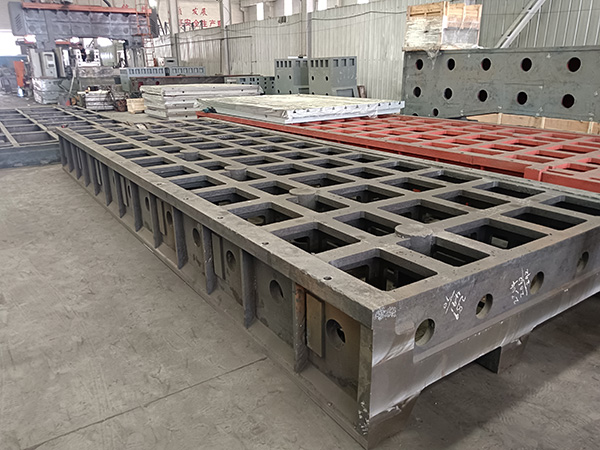
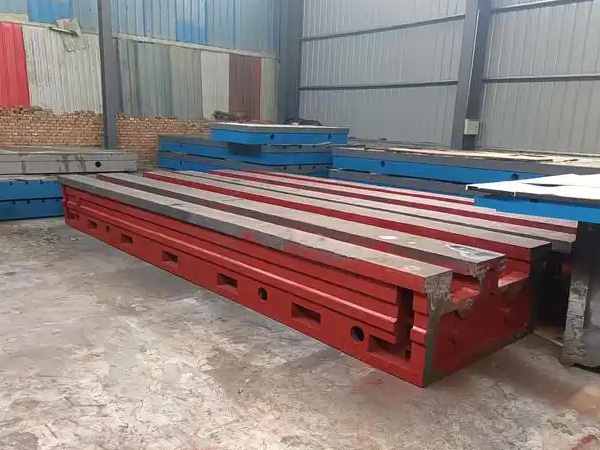
Machine tool castings form the structural backbone of CNC machines, lathes, milling centers, and other precision equipment. Their dimensional stability, rigidity, and internal stress control directly affect machining accuracy and service life. However, traditional casting production often involves long lead times, excessive inventory, and delayed quality feedback.
From the perspective of a machine tool castings manufacturer with established factory production capacity, Just-In-Time (JIT) production offers a strategic approach to align manufacturing output with actual demand. By reducing waste and improving process coordination, JIT production helps ensure consistent quality while supporting bulk supply requirements.
Understanding Just-In-Time Production in Manufacturing
Just-In-Time production is a manufacturing philosophy focused on producing only what is needed, when it is needed, and in the exact quantity required. For heavy industrial components like machine tool castings, JIT does not mean rushing production. Instead, it emphasizes process discipline, planning accuracy, and synchronized workflows.
Key principles include:
·Inventory reduction
·Continuous flow
·Process standardization
·Real-time quality feedback
When applied correctly, JIT production enhances both operational efficiency and product consistency.
Unique Challenges of JIT for Machine Tool Castings
Long Casting and Cooling Cycles
Unlike small fabricated parts, machine tool castings require extended solidification and cooling periods. These thermal processes must be carefully integrated into JIT planning without compromising metallurgical stability.
Stress Relief and Aging Requirements
Castings often undergo stress-relief treatments or natural aging. A factory implementing JIT must align these time-dependent steps with production scheduling to avoid bottlenecks.
Aligning Production Planning with Casting Processes
Demand Forecasting and Batch Optimization
Accurate forecasting is essential for JIT success. Manufacturers balance batch sizes to support bulk production while minimizing excess inventory. This approach allows flexible response to machine tool builder requirements without overproduction.
Process Standardization Across the Factory
Standardized molds, gating systems, and inspection routines reduce variability. In JIT production, consistency is critical, as deviations can disrupt tightly coordinated schedules.
Supplier Coordination and Material Flow
JIT production extends beyond the foundry floor. Raw material supply, mold preparation, and logistics must be synchronized to support continuous production.
For machine tool castings, this often involves:
·Stable iron or alloy supply
·Predictable mold material delivery
·Coordinated internal material handling
Factories with mature production systems are better positioned to manage this level of coordination.
Quality Control in a JIT Casting Environment
Early Defect Detection
JIT production emphasizes early-stage inspection to prevent defects from flowing downstream. For machine tool castings, this includes dimensional checks, surface inspection, and internal quality assessment.
Continuous Improvement Loops
Quality data collected during production feeds directly into process adjustments. This rapid feedback loop improves yield rates and supports consistent batch quality.
Inventory Reduction Without Supply Risk
One of the main goals of JIT is inventory reduction. However, for heavy castings, supply reliability remains critical.
Manufacturers achieve balance by:
·Maintaining strategic buffer stock
·Segmenting production by casting type
·Aligning production cycles with customer schedules
This approach ensures stable bulk supply without excessive storage costs.
Factory Layout and Workflow Optimization
Implementing JIT often requires changes to factory layout. Optimized workflows reduce material movement and waiting time, improving overall production efficiency.
For machine tool castings, efficient layout supports:
·Faster mold preparation
·Smoother casting flow
·Simplified inspection and handling
Benefits of JIT Production for Machine Tool Castings
When properly implemented, JIT production delivers multiple benefits:
·Shorter lead times
·Improved dimensional consistency
·Lower inventory costs
·Faster response to design changes
For customers sourcing machine tool castings in volume, these benefits translate into improved planning reliability and long-term supply stability.
Key Considerations Before Implementing JIT
Not every production environment is immediately ready for JIT. Manufacturers should assess:
·Process maturity
·Equipment reliability
·Workforce training
·Quality system robustness
Successful implementation depends on disciplined execution across the entire production chain.
Conclusion: JIT as a Strategic Advantage in Casting Production
Implementing Just-In-Time production for machine tool castings requires careful planning, disciplined execution, and strong factory-level coordination. When aligned with stable production processes, JIT helps manufacturers deliver consistent quality while supporting bulk supply requirements.
For machine tool builders and industrial users, working with a manufacturer that has adopted JIT-oriented production systems offers improved reliability, predictable lead times, and long-term supply confidence. As manufacturing efficiency becomes increasingly important, JIT production will continue to play a key role in modern casting operations.
References
GB/T 7714:Ohno T. Toyota production system: beyond large-scale production[M]. Productivity press, 2019.
MLA:Ohno, Taiichi. Toyota production system: beyond large-scale production. Productivity press, 2019.
APA:Ohno, T. (2019). Toyota production system: beyond large-scale production. Productivity press.
-
Implementing Just-In-Time Production for Machine Tool Castings
-
Stringent Requirements for Granite Platforms in the Aerospace Industry
-
Safe Stacking and Storage Tips for Cast Iron Surface Plates
-
Understanding Welding Table Weight Capacity: Key Information
-
Testing Methods for Machine Tool Castings Materials
-
How to Troubleshoot Measurement Errors on Granite Platforms
Botou Bozhong Precision Machine Tool Co., Ltd.
Copyright © 2025-2026 https://www.bozhong-weldingtable.com. All Rights Reserved Botou Bozhong Precision Machine Tool Co., Ltd.Copyright