






- Navigation -
 Current Location:
NEWS DETAILS
NEWS INFORMATION
Improve Visibility with LED Lighting for Welding Tables
AUTHOR:Bozhong Tool DATE:2026-01-19 20:37:17 HITS:127
Improve Visibility with LED Lighting for Welding Tables
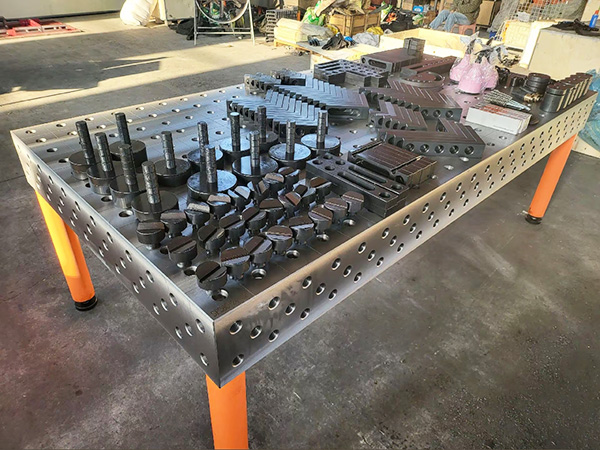
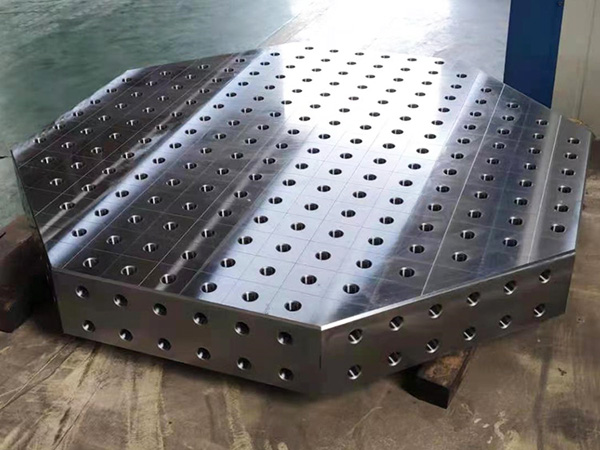
In any professional fabrication environment, the welding table is the center of every operation. No matter how advanced the tools are, poor visibility can reduce accuracy, slow production, and increase the risk of errors. That is why modern manufacturers and factory production workshops increasingly focus on upgrading lighting systems around the welding table. By integrating high-quality LED lighting, operators gain better control, safer workflows, and higher consistency across industrial projects.
For manufacturer-level production, visibility is not only about comfort. It directly affects dimensional accuracy, surface quality, and overall efficiency. When a welding table is properly illuminated, every joint, edge, and fixture position becomes easier to inspect and assemble.
Why Visibility Matters on a Welding Table
A welding table supports positioning, clamping, and assembly of metal parts. During production, operators must clearly see contact points, angles, and seams before and during welding. Insufficient light causes shadows, glare, and eye strain, which can lead to alignment mistakes and inconsistent welds.
In factory environments, even small visual errors can multiply across batches. Poor lighting slows down inspections and forces rework, increasing production costs. By contrast, a well-lit welding table improves:
·Joint visibility
·Part alignment accuracy
·Operator comfort
·Quality consistency
·Production speed
Manufacturers who optimize lighting at each welding table often see immediate improvements in workflow reliability.
What Makes LED Lighting Ideal for Welding Tables
LED lighting has become the preferred solution for industrial workshops because it provides stable, bright, and energy-efficient illumination.
Key advantages include:
·High brightness with low power consumption
·Long service life for continuous production use
·Low heat emission near the welding table
·Uniform light distribution with minimal shadows
·Flexible mounting options for industrial layouts
Unlike traditional lamps, LEDs do not flicker and do not generate excessive heat near sensitive fixtures. This makes them suitable for heavy-duty welding table environments where temperature control and safety are critical.
Integrating LED Lighting into Industrial Welding Workbenches
A welding table rarely operates alone. It is usually part of an industrial welding workbench system that includes frames, clamps, and sometimes a 3D welding table surface. Lighting should be integrated into the entire workstation design.
Overhead Lighting
Mounted above the welding table, overhead LED panels provide general illumination. In factory production lines, these lights ensure consistent brightness across multiple workstations.
Side and Task Lighting
Adjustable LED arms or strip lights can be positioned along the edges of the welding table. This approach reduces shadows created by fixtures and large components.
Multi-Angle Coverage
For complex assemblies on a 3D welding table, multi-direction lighting helps operators see vertical and side surfaces clearly, improving precision during clamping and welding.
Manufacturers designing welding tables for production environments often plan lighting positions as part of the workstation layout rather than adding them later.
How LED Lighting Improves Production Accuracy
Visibility directly impacts welding accuracy. When operators see clearly, they can align parts faster and detect problems before welding begins.
LED lighting on a welding table supports production in several ways:
·Better inspection of seams and joints
·Clear view of fixture positions
·Reduced eye fatigue during long shifts
·More stable visual conditions for batch work
In factory-scale manufacturing, consistency matters. A properly illuminated welding table ensures that every operator works under the same visual conditions, supporting standardized production processes across shifts.
Safety Benefits of LED Lighting on Welding Tables
Safety is another major reason to upgrade lighting around a welding table. Poor visibility increases the risk of accidental contact with hot surfaces, sharp edges, or moving parts.
LED lighting improves safety by:
·Reducing shadow zones
·Improving awareness of part placement
·Minimizing glare on metal surfaces
·Supporting clearer work posture
In manufacturer production workshops, safety improvements also reduce downtime and protect long-term workforce performance.
Optimizing Lighting for a 3D Welding Table
A 3D welding table allows clamping on multiple faces, which means parts may block light from certain angles. Standard overhead lighting alone is often insufficient.
To optimize LED lighting for a 3D welding table:
·Combine overhead and side lighting
·Use adjustable fixtures for different setups
·Avoid direct glare on reflective metal
·Ensure uniform brightness across surfaces
This configuration supports complex fabrication tasks and maintains visibility during multi-direction clamping and welding.
LED Lighting and Factory Production Efficiency
For manufacturers operating multiple welding tables in factory production, lighting consistency plays a key role in efficiency.
Uniform LED lighting across workstations:
·Reduces training time
·Standardizes visual conditions
·Improves inspection reliability
·Supports scalable production
When every welding table is equally illuminated, production quality becomes easier to control. Factory workflows benefit from fewer interruptions, smoother transitions between tasks, and improved output consistency.
Choosing LED Lighting for Industrial Welding Tables
When selecting LED lighting for a welding table, consider:
·Brightness level (lumens)
·Color temperature for metal surfaces
·Durability for industrial use
·Mounting flexibility
·Compatibility with production layouts
Manufacturers often match lighting systems to the size and configuration of the welding table, ensuring the illumination supports both small assemblies and large structural parts.
Long-Term Value for Manufacturers and Factories
LED lighting is not only a visual upgrade, it is a production investment. For factory-level manufacturing, improved lighting around a welding table leads to:
·Higher dimensional accuracy
·Reduced rework
·Faster setup times
·Safer working conditions
·Better production scalability
Over time, these benefits support higher output and lower operational costs for manufacturers managing continuous production cycles.
Final Thoughts on LED Lighting for the Welding Table
At the heart of every fabrication workspace is the welding table. By improving visibility with LED lighting, manufacturers and factory production teams gain stronger control over accuracy, safety, and efficiency.
A well-designed welding table equipped with proper LED illumination transforms daily operations into a more reliable and scalable production system. Whether used on an industrial welding workbench or a modular 3D welding table, the right lighting ensures every weld starts with clarity and finishes with consistent quality.
References
GB/T 7714:Veitch J A, Newsham G R. Exercised control, lighting choices, and energy use: An office simulation experiment[J]. Journal of environmental psychology, 2000, 20(3): 219-237.
MLA:Veitch, Jennifer A., and Guy R. Newsham. "Exercised control, lighting choices, and energy use: An office simulation experiment." Journal of environmental psychology 20.3 (2000): 219-237.
APA:Veitch, J. A., & Newsham, G. R. (2000). Exercised control, lighting choices, and energy use: An office simulation experiment. Journal of environmental psychology, 20(3), 219-237.
-
Improve Visibility with LED Lighting for Welding Tables
-
Implementing Just-In-Time Production for Machine Tool Castings
-
Stringent Requirements for Granite Platforms in the Aerospace Industry
-
Safe Stacking and Storage Tips for Cast Iron Surface Plates
-
Understanding Welding Table Weight Capacity: Key Information
-
Testing Methods for Machine Tool Castings Materials
Botou Bozhong Precision Machine Tool Co., Ltd.
Copyright © 2025-2026 https://www.bozhong-weldingtable.com. All Rights Reserved Botou Bozhong Precision Machine Tool Co., Ltd.Copyright